

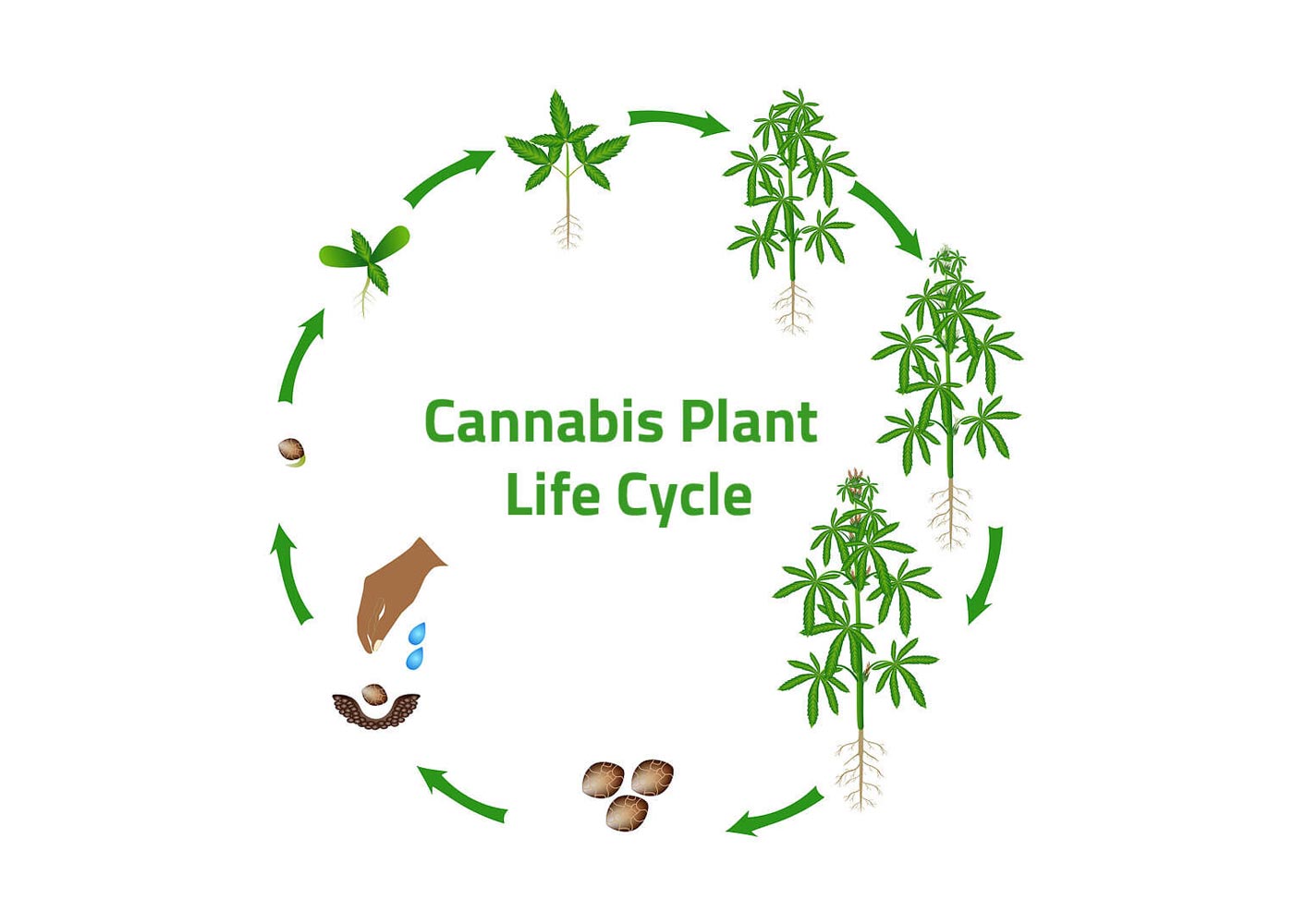
For anyone venturing into the world of cannabis cultivation,
comprehending the life cycle of cannabis plants is fundamental. Each stage
demands specific care and attention, from the initial seed germination to the
final harvest. Understanding these phases is crucial, as it directly influences
the health, vitality, and yield of your plants. This guide aims to demystify
the life cycle of cannabis plants, providing detailed insights and practical
tips. Whether you're a hobbyist grower or a professional cultivator, this
journey through the five key stages of a cannabis plant’s life will equip you
with the knowledge to nurture your plants effectively.
1. Germination Stage
The life cycle of a cannabis plant starts with the
germination stage. This is where the seed, given the right conditions of moisture
and warmth, begins to sprout. Typically, germination takes anywhere from 24
hours to a week. During this period, it's crucial to keep the seed moist but
not soaked. You can germinate seeds in various mediums like paper towels,
starter cubes, or directly in the soil. Once the taproot emerges from the seed,
it's time to transfer it to a growing medium, taking care not to damage the
delicate sprout. Successful germination is the first step towards a healthy
cannabis plant.
2. Seedling Stage
After germination, the plant enters the seedling stage,
which lasts about two to three weeks. During this phase, the plant develops its
first set of true leaves, which are crucial for photosynthesis. The seedling
requires a lot of light at this stage, but be careful not to expose it to too
intense light to prevent stress. Maintaining a stable environment is key, with
ideal temperatures around 68-77°F (20-25°C) and humidity levels of 60-70%.
Overwatering is a common mistake in this stage; it's vital to water the plants
moderately to avoid damping-off, a fungal condition that can kill seedlings.
3. Vegetative Stage
The vegetative stage is where the plant undergoes most of
its growth. This stage can last anywhere from 3 to 16 weeks, depending on the
strain and growing conditions. Cannabis plants in this phase require plenty of
nitrogen-rich nutrients and ample light to develop strong stems and lush
foliage. The best soil for cannabis during the vegetative stage is one that is well-aerated
and has good drainage, as this promotes healthy root development. This is also
the time to start training your plants if you're looking to maximize yield and
manage plant size.
4. Flowering Stage
The flowering stage is the final phase of growth, where the
plants start developing buds. Triggered by a change in the light cycle (less
light per day), this stage typically lasts about eight to 11 weeks. During
flowering, plants require more phosphorus and potassium to support bud
development. It's crucial to monitor the light schedule closely; even small
disruptions can stress the plants and affect yield. In this stage, you'll also
want to check for male plants and separate them from females to prevent
pollination, which can affect the quality of the buds.
5. Harvesting and Curing
Harvesting is the most rewarding part of the cannabis plant
life cycle. The right time to harvest depends on the strain and your desired
effects. Trichomes, the tiny crystal-like structures on the buds, give a good
indication of maturity. Once harvested, the buds need to be dried and cured to
enhance their potency and flavor. Curing is done by storing the dried buds in
airtight containers and opening them periodically to allow moisture to escape
and fresh air to enter. Proper curing can significantly improve the quality of
your final product.
Conclusion
The life cycle of cannabis plants is a fascinating journey
that demands patience, care, and knowledge. Understanding each stage, from the
initial germination to the final curing process, equips you with the ability to
provide optimal care for your plants, leading to a successful and fulfilling harvest.
For both novice and experienced growers, mastering this cycle is key to
producing high-quality cannabis. It's not just about the end product; the
process itself offers a rewarding experience, deepening your connection with
the art of cultivation. As you grow and learn with each cycle, your skills will
improve, and so will the quality of your harvest, making each cultivation cycle
a unique and enriching journey.
Share:


