

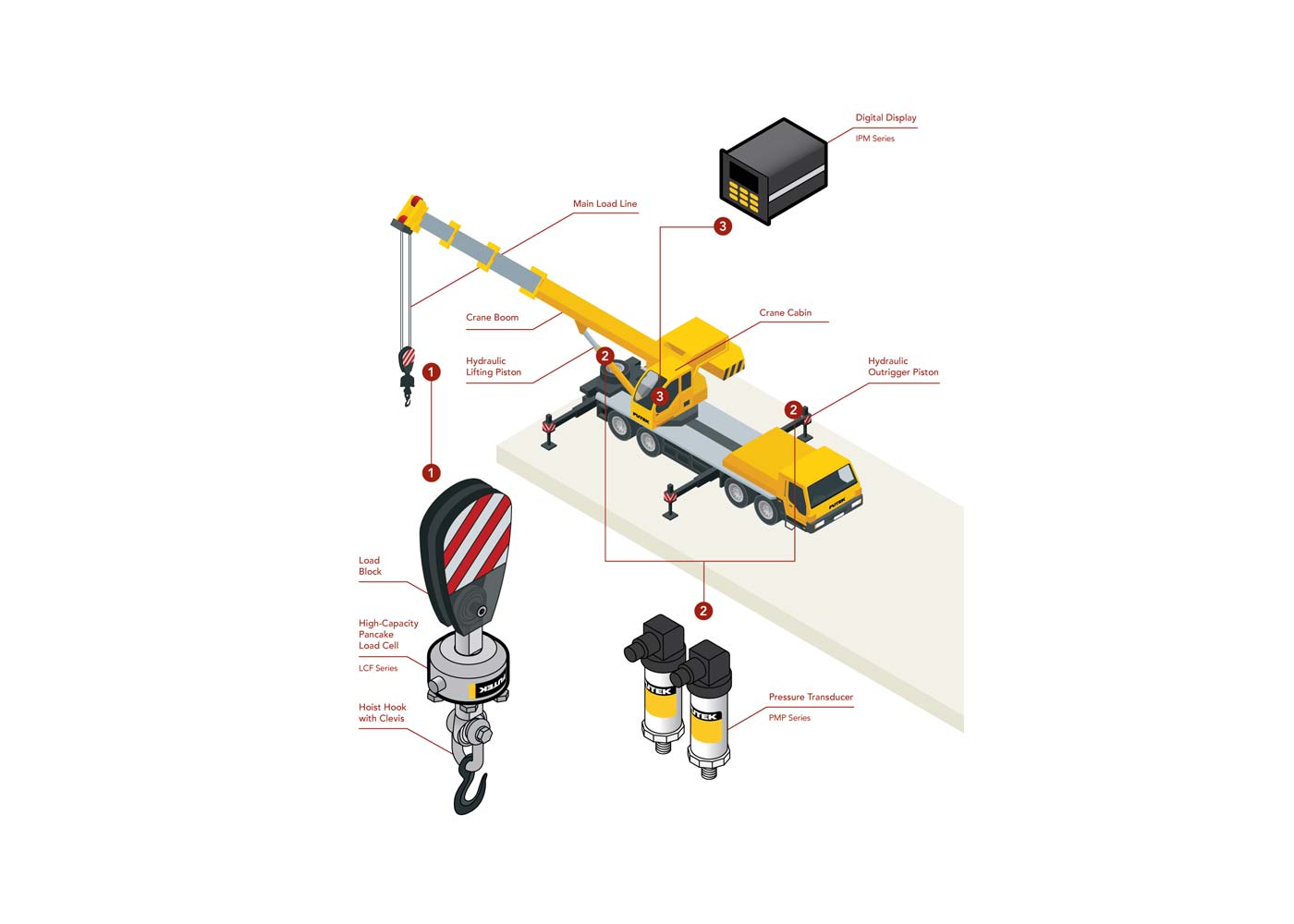
Accuracy, safety, and efficiency are essential in the heavy
machinery industry. Consider a crane lifting a load several tons above ground.
Assume the crane operator does not know the exact weight of the load. It's a
risky game, right? This is where load cells come into play. These small devices
have a significant impact, particularly in crane operations where safety and
precision are essential.
What is a Load Cell?
Simply put, a load cell is a device that detects weight or
force. Load cells are sensors used in cranes and other heavy machinery to track
the amount of force applied, allowing operators to understand the weight being
lifted. Through careful calibration, these load cells detect even minor weight
changes and translate them into readable data on a screen in real time.
However, load cells do more than just measure weight. They
aim to provide crane operators with the information they need to safely manage
loads, prevent equipment damage, and ensure that operations run smoothly.
Why Are Load Cells So Important for Cranes?
1. Ensuring Safety on the Job
When dealing with heavy loads, safety is critical. Load
cells are a primary safeguard that prevent cranes from lifting beyond their
capacity and alert operators to potential overloads. Overloading a crane can
result in serious accidents, equipment damage, or even fatalities. Load cells
help to mitigate these risks by accurately assessing load weight.
Imagine lifting a load without knowing its weight. The crane
may function normally for a while, but when the weight exceeds the safe limits,
things can go wrong quickly. Load cells reduce this uncertainty by acting as
the crane's eyes, monitoring and confirming that each lift is operating within
safe limits.
2. Improving Efficiency and Precision
Every time a crane lifts a load, the precise weight
influences how the machine operates. Load cells provide accurate weight data,
allowing operators to make fine adjustments. This ensures that cranes can
handle weight efficiently while also saving time. With a dependable weight
reading, operators can make real-time decisions, streamlining operations while
maintaining safety.
3. Preventing Equipment Damage
Cranes are designed to withstand specific loads within
certain tolerances. Over time, lifting loads that are too heavy can wear out
the crane, causing structural damage and expensive repairs. Load cells help by
alerting operators when a load is too heavy, lowering the risk of damage.
Heavy machinery maintenance and repair costs can quickly add
up. Load cells reduce these risks by ensuring that equipment only handles the
loads for which it was designed, thereby extending crane life.
The Role of Load Cells in Real-World Crane Applications
Consider a construction site where cranes are transporting
heavy steel beams. These beams vary in weight, and each lift requires precise
measurements to ensure proper balance and distribution. A load cell embedded in
the crane provides the operator with the exact weight, allowing them to adjust
their lifting techniques to match the load.
Consider the case of port cranes, which handle large
shipping containers. With varying loads, precise measurements are critical.
Load cells ensure that cranes lift containers safely, maximizing load capacity
while avoiding accidents.
Types of Load Cells Used in Cranes
1. Compression Load Cells
Compression load cells measure weight using pressure applied
directly to the sensor. This type is commonly used in cranes because it can
handle heavy loads while providing stable, dependable measurements. Compression
load cells are strong and long-lasting, designed to withstand the high
pressures encountered in crane operations.
2. Tension Load Cells
Tension load cells measure weight by detecting the pulling
force on the sensor. These are especially useful in applications where the
crane lifts loads using slings or cables. Tension load cells provide precise
data on the force applied to the lifting mechanism, ensuring a safe balance
between the load and the crane.
3. Shear Beam Load Cells
Shear beam load cells measure horizontal force and are
commonly used in areas with limited space. These load cells provide accuracy
without taking up much space in cranes with loads confined to specific areas.
Nuanced Insights into Load Cells’ Impact
Load cells do more than just provide weight data; they also
provide operators with the information they need to make critical decisions in
real time. Load cells strike a careful balance between productivity and safety
by allowing cranes to operate at full capacity without exceeding safety limits.
In a field like heavy machinery, balance is essential.
Furthermore, with the rise of smart load cells, these
devices are increasingly being integrated with digital systems that monitor,
track, and analyze load data in real time. This technological advancement means
that load cells are more than just tools; they are part of a larger network of
safety measures that improve crane performance by providing data that can be
logged, reviewed, and even shared remotely.
The Future of Load Cells in Heavy Machinery
As technology advances, load cells become smarter, more
compact, and capable of handling even greater levels of precision. Consider a
crane that not only tells you the weight of the load, but also its precise
distribution. With sensors integrated into each component of the load cell
system, operators could eventually receive 3D weight maps that display not only
the total weight but also any imbalances or shifts in real time.
This type of data could make crane operations safer than
ever before, reducing the margin for error and preventing accidents before they
occur. As we transition to more data-centric heavy machinery, load cells will
become increasingly important in supporting the machines and the people who use
them.
In Conclusion
Load cells are the unsung heroes of the heavy machinery
industry, particularly for cranes. These small sensors make a significant
difference by ensuring safety, increasing efficiency, and extending equipment
life. They enable crane operators to lift with confidence, knowing precisely
the weight and distribution of each load.
In an industry where accidents can be catastrophic, load
cells provide peace of mind. They enable operators to go about their business
with an added layer of security, knowing that technology has their back. As
load cell technology advances, the heavy machinery industry will become safer,
more efficient, and more precise, allowing operators to perform their duties
effectively and safely.
Share:


