

The early years of childhood represent a critical window for
cognitive development. During this period, young minds form foundational
connections that influence learning capacity throughout life. What happens in
these formative years matters far more than many parents realize.
Modern child care has evolved dramatically from simple
supervision into comprehensive early education. Today's leading programs
recognize that young children possess a remarkable capacity for absorbing
complex concepts when presented through age-appropriate methods that honor
their natural curiosity and love of exploration.
Building Scientific Thinking Through Exploration
Young children are natural scientists. They constantly
observe their surroundings, form hypotheses about how things work and test
their ideas through experimentation. Quality early education programs channel
this innate curiosity into structured learning experiences.
Simple activities introduce scientific concepts without
overwhelming young learners. Water play teaches properties of liquids and
volume. Planting seeds demonstrates life cycles and the needs of living things.
Building with blocks introduces principles of balance, gravity and structural
integrity.
These experiences lay the groundwork for formal science
education that comes later. Children who explore scientific concepts early
develop comfort with inquiry-based thinking that serves them throughout their
academic careers and beyond.
Introducing Mathematical Concepts Naturally
Mathematics surrounds young children in their daily experiences.
Counting steps, sorting toys by color or size, recognizing patterns in music
and comparing quantities during snack time all involve mathematical thinking.
Effective early education weaves mathematical concepts
throughout daily routines rather than treating math as a separate subject.
Children learn to recognize numbers, understand quantity relationships, and
develop spatial reasoning through activities that feel like play rather than
instruction.
This natural integration helps children develop positive
associations with mathematics before encountering formal instruction. Those who
experience math as enjoyable and relevant during early childhood approach later
mathematical challenges with confidence rather than anxiety.
Fostering Engineering Mindsets Early
Engineering involves identifying problems and creating
solutions through design and construction. Young children engage in engineering
thinking whenever they build towers, construct pretend houses or figure out how
to make toy cars roll faster down ramps.
Quality child care programs provide materials and
opportunities that encourage this design thinking. Open-ended construction
toys, art supplies and found materials invite children to imagine, create, test
and refine their ideas. Educators guide this process by asking questions that
prompt deeper thinking without dictating solutions.
These early engineering experiences develop persistence and
resilience. Children learn that initial failures provide information for
improvement rather than reasons for discouragement. This growth mindset proves
valuable across all areas of learning and life.
Developing Technology Literacy Appropriately
Technology literacy extends beyond screen time and digital
devices. Understanding how tools work, learning to use instruments for
observation and measurement, and grasping cause-and-effect relationships all
contribute to technological thinking.
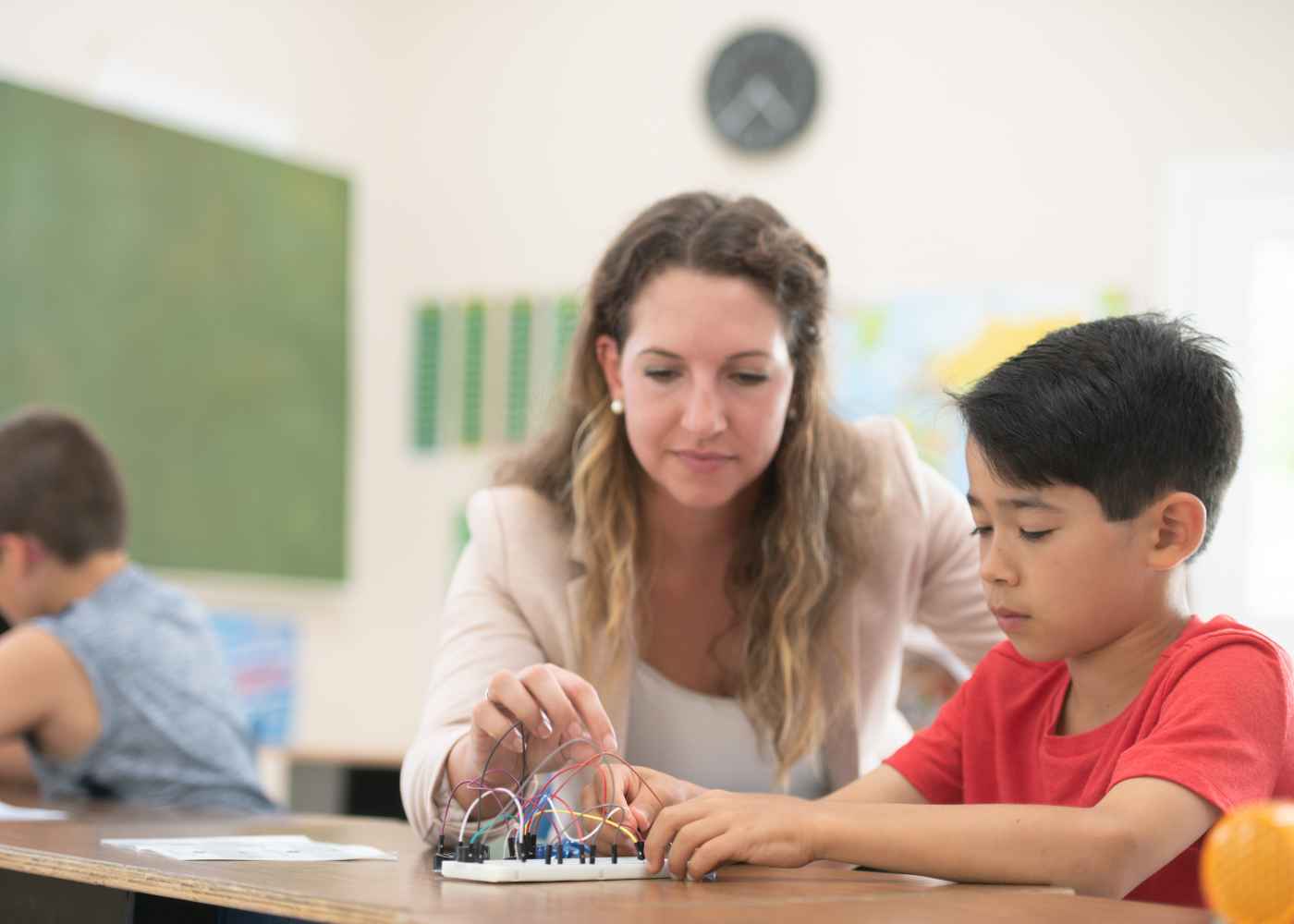
Thoughtful early education programs introduce technology
concepts through hands-on experiences with real objects. Magnifying glasses
become tools for scientific observation. Simple machines demonstrate how
technology amplifies human capability. Cooking activities show how tools
transform raw ingredients into finished products.
When digital technology appears in quality programs, it
serves specific educational purposes rather than functioning as passive
entertainment. Interactive applications that respond to children's input teach
foundational concepts about how digital systems work while developing fine
motor skills and logical thinking.
Connecting Disciplines Through Integrated Learning
The boundaries between science, technology, engineering and
mathematics blur naturally in early childhood. A single activity might involve
counting, observing, building and problem-solving simultaneously. This
integration reflects how these disciplines connect in the real world.
Effective early education embraces this natural integration
rather than artificially separating subjects. Children building a bridge for
toy cars encounter engineering challenges, mathematical concepts about
measurement and scientific principles about weight and balance, all within one
engaging activity.
This holistic approach prepares children for elementary
education, where they will encounter these subjects more formally. Having
experienced how disciplines connect, they can appreciate relationships between
subjects rather than viewing each as isolated from the others.
Supporting Development Through Quality Programs
Parents seeking child care
that prepares children for academic success should look for programs that
intentionally incorporate STEM concepts through play-based learning. Educators
trained in early childhood development understand how to present complex ideas
in ways young children can grasp and enjoy.
The best programs balance structured learning with free
exploration. They provide environments rich with materials that invite
investigation and discovery. They employ educators who ask thoughtful questions
and guide children's natural curiosity toward deeper understanding.
These early educational experiences establish foundations
that support learning throughout life. Children who develop scientific
thinking, mathematical reasoning, engineering mindsets and technology literacy
during their earliest years carry these capabilities forward into elementary
school and beyond, prepared to engage confidently with increasingly complex
ideas.
Share:


