

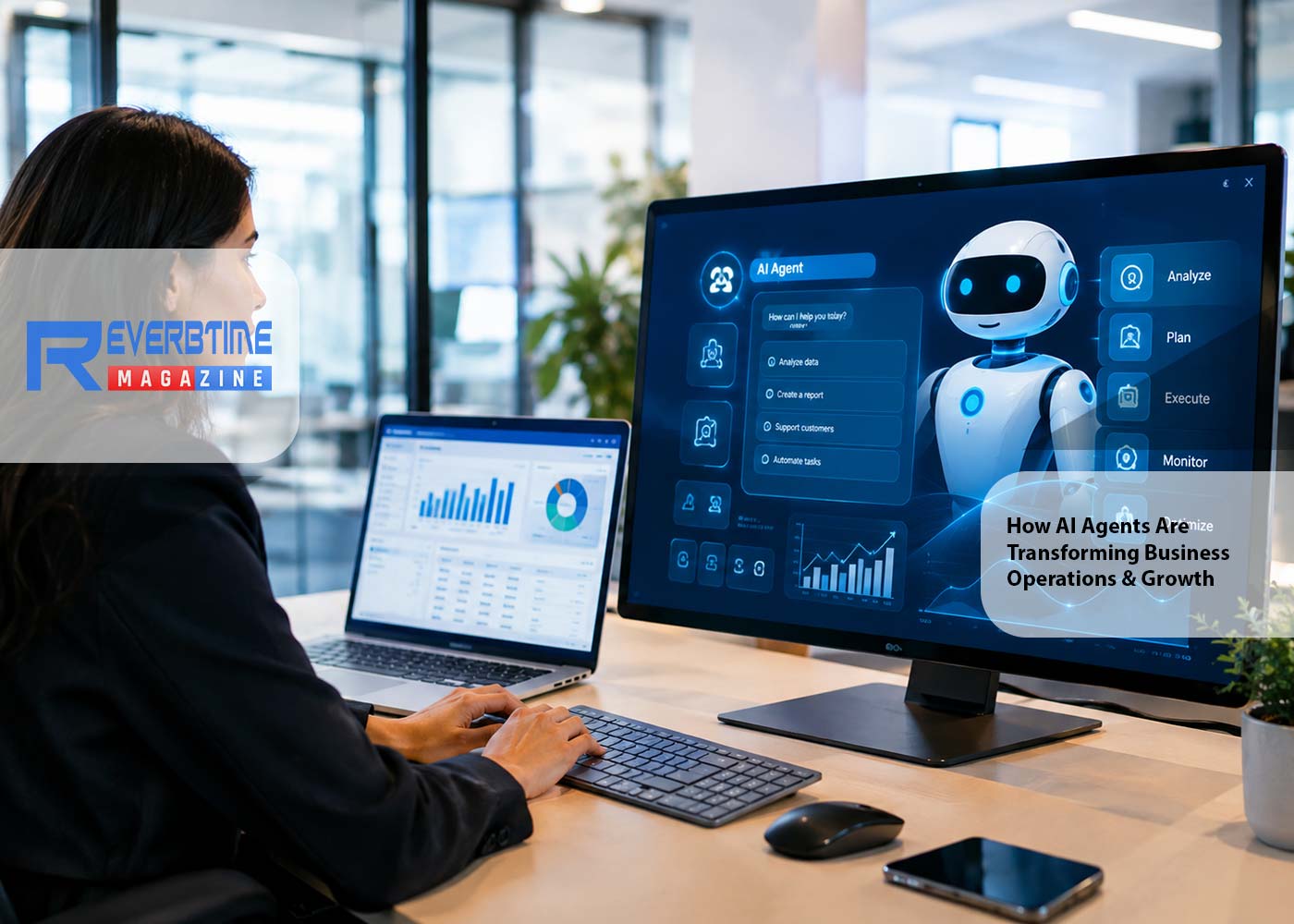
Artificial intelligence is rapidly changing the way
businesses operate, compete, and connect with their customers. While AI was
once mainly associated with data analysis and automation, businesses are now
using more advanced AI systems that can perform tasks, make recommendations,
and support decisions with minimal human intervention.
As these technologies continue to develop, companies that
integrate AI into everyday operations can improve efficiency, reduce repetitive
work, and create new opportunities for sustainable growth.
The Growing Role of AI in Business
Modern businesses generate enormous amounts of information
every day. Managing this information manually can take considerable time and
resources. AI can help organizations analyze data, identify patterns, and turn
information into useful insights much faster.
AI-powered tools can also automate repetitive processes such
as responding to common customer questions, organizing information, monitoring
business performance, and assisting employees with routine tasks. This allows
teams to spend more time on activities that require creativity, strategy, and
human judgment.
The biggest advantage is not simply automation. It is the
ability to combine automation with intelligent decision-making.
How AI Agents Can Improve Business Operations
AI agents represent a step beyond traditional software
automation. Instead of following only a fixed set of instructions, AI-powered
systems can analyze a situation, determine the appropriate action, and complete
a series of related tasks.
For example, an AI agent could help a sales team research
potential customers, organize information, prepare initial communications, and
track follow-up activities. In customer service, AI can assist with identifying
common problems and directing customers toward appropriate solutions.
When these processes are properly implemented, employees can
work more efficiently without having to spend their time on repetitive
administrative activities.
How AI Is Changing SEO Services
Search engine optimization is another area experiencing
significant changes because of artificial intelligence. SEO professionals
traditionally spend substantial amounts of time researching keywords, analyzing
competitors, monitoring rankings, and evaluating website content.
AI can now support many of these activities by processing
large amounts of search and website data in a short period of time. It can help
identify content opportunities, recognize search trends, analyze user intent,
and provide recommendations for improving website performance.
AI is also changing the way businesses approach content
creation. Instead of focusing only on individual keywords, SEO strategies
increasingly need to address broader topics, search intent, useful information,
and the overall experience of the reader.
This does not mean that human SEO professionals are becoming
unnecessary. On the contrary, human expertise remains important for developing
strategies, evaluating AI-generated recommendations, understanding a particular
business, and ensuring that content provides genuine value.
Businesses that combine AI-powered tools with experienced SEO professionals can
potentially make their optimization processes faster and more data-driven.
AI and Customer Experience
Customer expectations are constantly increasing. People want
quick answers, personalized recommendations, and convenient interactions with
businesses.
AI can help companies meet these expectations by analyzing
customer behavior and providing more relevant experiences. Chatbots,
recommendation systems, automated support tools, and personalized marketing
campaigns can all use AI to respond to customer needs more effectively.
For example, an online retailer can use AI to understand
browsing and purchasing patterns and recommend products that may be relevant to
a particular customer. A service provider can use AI to identify frequently
asked questions and provide immediate assistance.
Better customer experiences can contribute to higher
satisfaction, stronger relationships, and improved customer retention.
Making Better Business Decisions With AI
One of the most valuable applications of AI is its ability
to support decision-making. Businesses can use AI to analyze sales figures,
customer behavior, market trends, and operational data.
Instead of relying solely on assumptions, managers can use
these insights to identify potential opportunities and problems earlier. AI can
highlight patterns that might otherwise be difficult to detect when large
amounts of information are involved.
However, AI should generally be viewed as a decision-support
tool rather than a complete replacement for human judgment. Business leaders
still need to consider factors such as company goals, customer relationships,
ethics, and market conditions.
Preparing for an AI-Driven Future
AI adoption is likely to continue expanding across
industries. Companies do not necessarily need to transform every process at
once. A more practical approach is to identify repetitive or time-consuming
tasks where AI could provide measurable benefits.
Businesses can begin with smaller projects, evaluate the
results, and gradually expand their use of AI. Employee training is equally
important because successful AI adoption depends not only on technology but
also on people knowing how to use it effectively.
Companies that approach AI strategically can create more
efficient workflows while giving employees more time to focus on higher-value
work.
Final Thoughts
Artificial intelligence is becoming an important part of
modern business strategy. From improving daily operations and customer experiences
to supporting SEO services and strategic decision-making, AI offers businesses
new ways to work more efficiently and compete in changing markets.
The companies most likely to benefit will not necessarily be
those that use the most AI, but those that understand where the technology can
create genuine value. Combining intelligent automation with human expertise can
help businesses build more efficient operations and create a stronger
foundation for long-term growth.
Share:


