

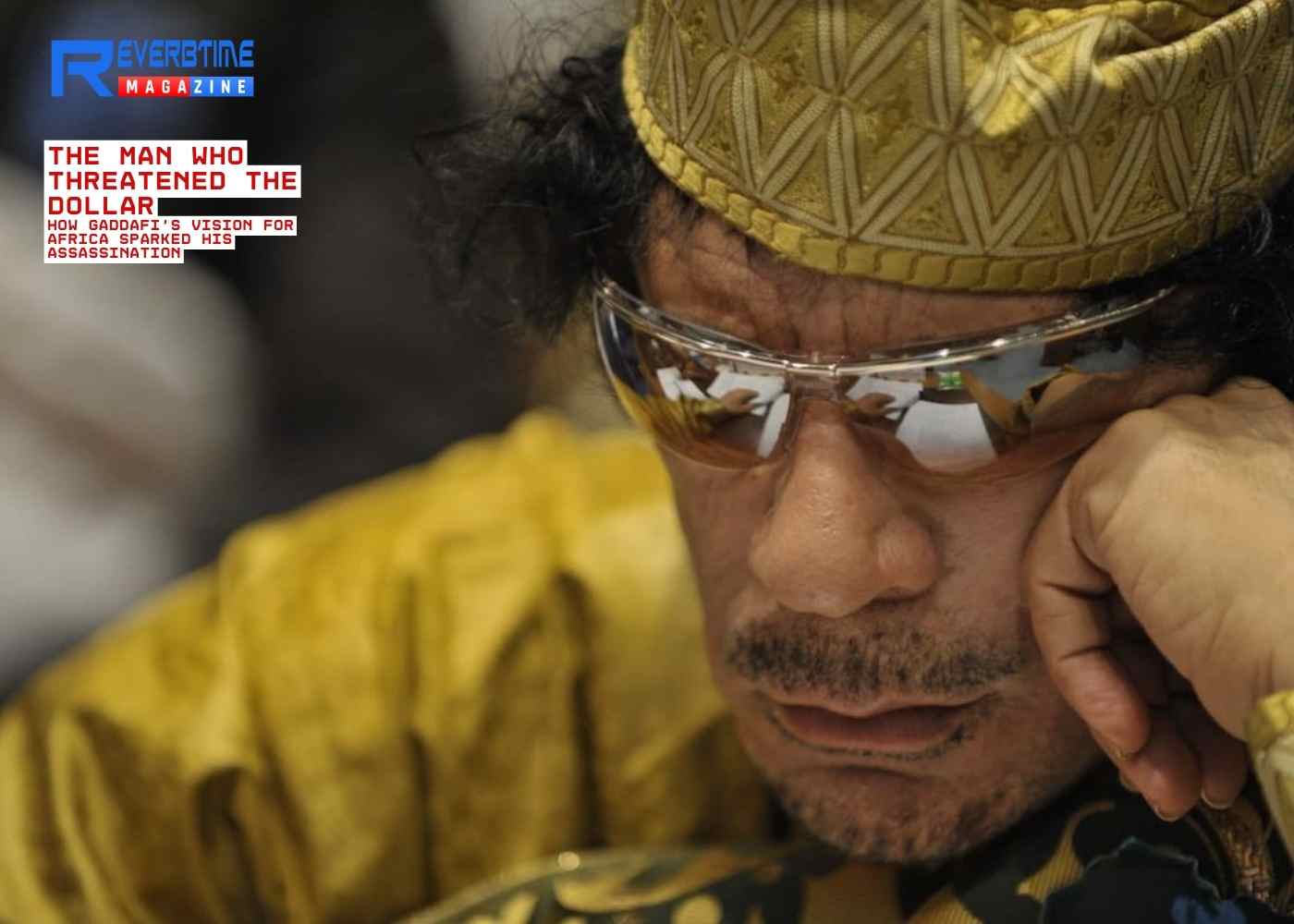
By 2011, Libya had descended into civil war and the gruesome
public murder of Gaddafi. Western governments promoted a more ‘official’
narrative around ‘humanitarian intervention’ and liberation from dictatorship.
But, there was a much more sophisticated and dark geopolitical game behind the
curtains. Based on testimonies and timelines, as well as leaked documents,
Gaddafi’s killing may have had less to do with democracy and more to do with
the thwarting of Western economic interests, the grabbing of Libyan oil for
themselves and putting an end to the birth of a pan-African gold-backed
currency.
This article explores an overlooked testimony from an insider
(Former US House Rep Wayne Curtis Weldon) who was part of the US diplomatic efforts during the Libyan
war, to understand how it wasn’t just Gaddafi’s past that made him a target, it
was Gaddafi’s vision for Africa that made him a threat to Western hegemony.
The Insider’s Claim: Gaddafi Wanted to Resign
The video testimony of an anonymous individual described as
a high-level American official who has direct experience in the Libyan conflict
makes some startling claims. He states that “Muammar Gaddafi even offered to
step down, a message delivered to the U.S. government directly”. According to
the source, he went with staffers from both the Bush and Biden administrations,
along with Larry Mendte, a “well-respected” journalist and former anchor of ABC One New
York, and a cameraman to film the journey, “so there was a public record and no
intelligence agency could screw with him”.
“I carried back Gaddafi’s letter in which he asked to
resign. The US also did not desire his resignation. They were gonna kill him.”
- Former U.S. House Representative Wayne Curtis Weldon
This claim runs counter to public accounts of Gaddafi’s
unwillingness to step down from leadership. If true, then the NATO bombing
campaign that moved Libya into a decade of chaos and resulted in thousands of
dead civilians is difficult to justify.
Why Did the West Want Gaddafi Dead?
1. A United Africa with a Gold-Backed Currency
Gaddafi was a champion of Pan Africanism. He envisioned a
United States of Africa that would have a continental army, a central bank that
would issue the Gold Dinar currency backed by gold.
“Gaddafi wanted to politically unify the continent of Africa
as a collection of countries sharing an economy, much like Europe.” “He wanted
to base it on the gold standard.” – Former US House Rep Wayne Curtis Weldon
They saw this as a threat to the U.S. dollar and euro being
the main currencies in African trade. Leaked emails from Hillary Clinton’s
private communications system (via WikiLeaks) indicate that the French
perceived Gaddafi’s monetary ambitions as a direct challenge to the CFA franc,
a currency rooted in colonialism which is used by 14 African nations and is
guaranteed by the French Treasury. One such email, dated April 2, 2011, from
Clinton advisor Sidney Blumenthal read:
“Gaddafi’s regime is sitting on 143 tons of gold… to make a
pan-African currency… This was an effort to give Francophone Africa an option
to the French franc (CFA).”
It again highlighted, for me at least, the fundamentally
economic rather than humanitarian concerns driving the intervention.
2. Oil and Libya’s Sovereign Wealth Fund
Libya has Africa’s largest known oil reserves at 48.4
billion barrels. It also boasted a sovereign wealth fund of over $65 billion in
2011, run through the Libyan Investment Authority (LIA).
Access to them was a high priority for many Western
countries. Libya’s destabilization also opened the door for foreign companies
to negotiate energy contracts on better terms and access Libya’s financial
assets, much of which had been frozen, and some controversially misallocated,
after Gaddafi’s
ouster.
The Fallout: A Nation in Ruins
Libya has since experienced political upheaval, rampant terrorism, and an ensuing humanitarian crisis since the 2011 NATO-led intervention:
- 2012: U.S. Ambassador Christopher Stevens was killed in an attack on the U.S. consulate in Benghazi.
- 2014–2020: Libya descended into civil war between rival governments in the east and west, leading to the deaths of thousands and massive displacement.
- 2023: Migrant slavery markets were discovered, with human beings being sold openly in parts of Libya, a shocking regression.
The ongoing conflict has also led the UN to report that more
than 400,000 Libyan’s have been displaced and about 9,000 civilians killed.
The Cost to the West and Truth
Former US House Rep Wayne Curtis Weldon also mourns the
“human” part of the human cost, concerning in particular young Americans led to
fight in wars abroad.
“We’ve afforded our children the space to be sucked into struggle,
into death. These people are doing this… they’ve never served, in any way.
“It’s disgusting that they do that and just sit back and cash all this money.”
This sentiment has historically been tied to concern over
the military-industrial complex, where policymakers, lobbyists, and defense
contractors reap the benefits of perpetual war while common folks foot the
bill.
Conclusion
Muammar Gaddafi wasn’t a saint. His government was
repressive and committed human rights violations. But the story is complicated
by revelations of his plans for a peaceful resignation and plans for a united,
economically independent Africa. What the evidence points to is that the real
crime of Gaddafi, in the eyes of Western powers, was threatening to free Africa
from Western economic imperialism.
Ten years later, as we assess the Libya intervention, we
must return to the question of who wins when leaders are toppled, nations
disintegrate, and new puppet regimes are planted.
Share:


