


At the core of the mineral-rich state of Kogi in Nigeria is
the story that reveals the dirty dealings in the world of Nigerian politics- a
well-orchestrated witch-hunt against Senator Natasha Akpoti-Uduaghan, who committed the cardinal sin of daring to
inquire about the mineral bounties that Kogi State is endowed with. This report
sheds light on how influential political players, namely, the Senate President,
Godswill Akpabio and the former Governor Yahaya Bello, undertook a well-orchestrated
move to shut out a Senator whose investigations jeopardized many decades of
mismanagement and possible abuses of mineral resources.
There is consistent evidence that the retaliation came
swiftly as they deprived Senator Akpoti of political positions and suspended
her in the Senate, and finally charged her with crimes when she initiated
research about the solid mineral resources of Kogi State. This is not just
political competition, but it is the use of the state to defend vested
interests of billions of naira value.
Chapter 1: The Mineral Goldmine That Changed Everything
Kogi State: Nigeria's Hidden Treasure Trove
The state, Kogi, which is also referred to as the Confluence
State because of the intersection of Niger and Benue rivers, is located on the
surface of one of the most important places of the mineral store of Nigeria.
Modern geological explorations show the frightful magnitude of this treasure:
The Mineral Inventory:
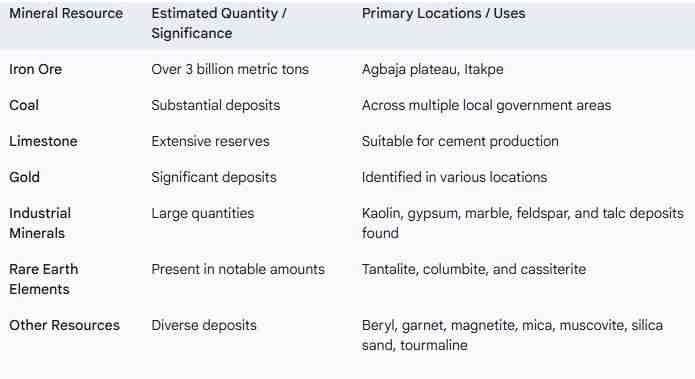
In its 2024 in-depth mineral potential assessment all over
Nigeria, the Nigerian Geological Survey Agency estimated that the mineral
wealth of the state of Kogi is worth in excess of N50 trillion (USD 65
billion). That is why Kogi is ranked as one of the most mineral-rich states of
the country.
Kingdom of the Iron Ore
Coined as the crown jewel of Kogi mineral wealth is the
Agbaja Iron Ore Project, within 15km northwest of Lokoja. The mineral deposit
is a shallow, flat-lying channel deposit of iron of the following composition:
- Proven reserves: 200 million metric tons
- Predicted supplies: an extra 100 million metric tons
- Iron content: It can have more than 67 per cent after
beneficiation
The project was to supply Ajaokuta Steel Complex, a
potential money spinner worth billions of dollars in a year. However, even
after decades of progress, the untapped potential has never been achieved, and
this fact would become one of the focuses of investigation by Senator Akpoti.
Chapter 2: The Senator Who Dared to Ask Questions
Background: From Lawyer to Legislator
The latest generation of Nigerian politicians is represented
by Natasha Hadiza Akpoti-Uduaghan, born December 9, 1979. She was the daughter
of a Ukrainian mother and a Nigerian father and had her fresh ideas on Nigerian
politics. Naturally, her education in law and her history as a civil rights
activist made her a person who is ready to disrupt the status quo.
A former state House of Assembly candidate, and known as a
dynamic young politician, is one of the few profiles that emerged as an
outspoken leader calling attention to transparency and good governance in the
politics of Kogi Central Senatorial District, when she was elected in the year
2023. Her appointment to the Senate Chairman of the Senate committee on local
content was regarded as a reward for her legal experience and devotion to
industrialisation in Nigeria.
When Curiosity was a Crime: The Fatal Inquiry
Sources in the senate have said that the origin of the
troubles faced by Senator Akpoti started late in 2023 when she initiated
penetrating inquiries as to how mining licenses were managed and distributed in
Kogi State. Her questions concentrated on several areas:
1. Revenue Transparency: Why were the revenues from minerals
not reflected in the state projects in development?
2. License Allocation: What were the distributions of the
mining licenses, and to whom?
3. Federal vs. State: So, what was the correct governing
body of mineral resources?
4. Community Benefits: What were the locals gaining through
the mining of minerals?
Such questions went to the core of a system that had been
working in the shadows over the decades.
The Timeline of Retaliation
September 2023: After repeated inquiries, Senator Akpoti
becomes formal with investigations into the management of mineral resources in
Kogi State.
October 2023: Informal requests by senior colleagues to take
cognizance of other things.
November 2023: According to sources, there is more pressure
from the Senate leaders to drop the investigations into the mineral resources.
December, 2023: No explanation of the committee of Senator
Akpoti on the Local Content budget cut.
January 2024: Threats by anonymous senders start, such as
messages telling her to remember to stay in her lane.
February 2024: Her chairmanship in the Senate Committee on
Local Content is reviewed.
March 2024: More accusations of sexual harassment and
bullying methods are reported.
June 2024 - February 2025: Persecutions continue, and
efforts are aimed at marginalising her authority in the senate.
March 6, 2025: Senator Akpoti is told by the senate to step
aside for six months over a charge of, among other things, misconduct.
June 2025: The Federal Government plays its part by bringing
criminal defamation counts against her.
Chapter 3: The Web of Power - Key Players in the Conspiracy
Senate President Godswill Akpabio: The Enforcer
Akpabio, who is the president of the senate, becomes the
principal member in the fight against Senator Akpoti. According to sources in
the Senate, they were subjected to a pattern of behavior that aimed at
isolating and marginalizing the Kogi Central Senator:
The Akpabio Connection to Mineral Resources:
- Past Akwa Ibom State Governor (2007-2015)
- The-Former minister of Niger Delta Affairs (2019-2022)
- A great experience of managing and allocating resources
- Reputable for preserving well-set interests in the
extractive business
Insiders have claimed that Akpabio considered the inquiries
by Senator Akpoti of the senate as a threat to the formalities regarding the
handling of mineral resources. Her inquiries on transparency and accountability
dented a system that was run with very little supervision for more than 50
years.
Evidence of Systematic Marginalization:
- According to the report, the committee assignments of
Senator Akpoti were downgraded
- This did not allow her much speaking time in the plenary
sessions
- Motions to increase motions on the management of mineral resources
were blocked
The measures that she introduced in the legislature were
referred to committees that were opposed to her programs
Former Governor Yahaya Bello: The Local Strongman
The historical representation of the local power structure
that the investigations of Senator Akpoti posed a threat to is represented by
former Kogi State Governor Yahaya Bello (2016-2024). In his eight years of
tenure, Bello exercised strong control over the mineral resources of the state
in one way or another:
The Bello Mineral Empire:
- Formed exclusive tie-ups with some mining companies
- Installed a network of local government officials who were
prepared to support his mineral busybody agenda
According to him, embezzled mineral revenues were used to
finance political affairs
Constructed a patronage system for the selection of mining licenses
Insiders of the Kogi State government point out that Bello
also regarded Senator Akpoti as an existential challenge to the system he had
carefully set up until then. Her status and power on the federal level, as well
as her legal experience, provided her with arsenals that the local resistance
lacked.
The Intimidation: According to various sources, the
Intimidation Campaign entailed the following:
- Monitoring of her activities in the state of Kogi
- Threats against her relatives and people she knew
- Business coercion directed against those businesses that
relate to her
- Transmission of fake news regarding her personal life and
political reasons
Corporate Interests and Shadow Networks: The Non-State Actors
The probe points to the presence of a maze of corporate
interests that is tied to the preservation of the status quo involving the
mineral resources of Kogi State:
Dubious-Licensed Mining Companies:
- A number of businesses run without a thorough analysis of
the impacts on the environment
- Opaque-owned foreign organizations
- Local firms that are known to be associated with political
personalities
- The informal mining organizations that are not subject to
regulatory measures
Financial Networks:
- Banks that enable off-putting dealings regarding mineral
incomes
- Shell firms that are party to mineral export deals
- Local business societies were lost in the course of the
established patronage systems
- Families under the constraints of traditional authorities
that benefit from the existing arrangements
Chapter 4: The Sexual Harassment and Victimization Campaign
The Personal Becomes Political
The most disturbing element of the character assassination
of Senator Akpoti was the alleged gender-based sexual harassment/intimidation.
There is also what multiple sources describe as a clear strategy to undermine
her credibility and respectability.
Documented Incidents Include:
- Comments about her appearance and personal life on the
floor of the Senate
- Efforts to separate her from male peers by suggesting that
her motivations are less than pure
- Propagating fake news about her affairs
- Invoking traditional gender stereotypes to raise doubts
about her fitness for office
The Larger Context: This bullying was one step in the plan to:
- Distract her from her sleuthing
- Deter other women from seeking to challenge entrenched
pillars of power
- Establish a hostile enough workplace that she would tender
her resignation.
- Create an air of illegitimacy around her leadership
Effects on Her Legislative Clout
The intimidation took a heavy toll on Senator Akpoti's overall
disposition to her legislative responsibility:
- Attending fewer committee hearings
- Raised security risks linked to her movement
- Psychological trauma is affecting her legislative
priorities
- Isolation from other potential allies who didn't want to
get involved
Chapter 5: The Loss of the Local Content Committee - The Turning Point
Understanding the Strategic Importance
And Senator Akpoti , as the Chairperson on the Committee on
the Senate Committee on Local Content, had an active and not omnibus role to
play when she investigated the Mineral Resources. The Local Content Act
provides that:
- Nigerian businesses are given preference in the extractive
sector
- Resource extraction projects contribute positively to
local communities
- Local Capacity Building Technology transfer is carried out
for local capacity building.
- Environmental standards are also kept up
It was this Committee that had oversight over issues that
Senator Akpoti was investigating in Kogi State.
Akpoti's suspension on March 6, 2025, is?a classical case of
the use and abuse of legislative power in the history of Nigeria. Adding on?Suspension
for 'Misconduct' Section 6.1 and 6.2 are the basis for the suspension, but it
is based on robot rules violations.
The Orchestrated Removal
How They Booted Her: A Real Power Play
Okay then, here is the way the whole thing broke. Rumor has
it that her forced exit was not a mere fight, but a straight-out conspiracy
attack.
The Process:
1. Pressure Cooker: Senators with big names began piling on
leadership, and hinting that her appointment was some secret that had to be
kept in the bathroom like a black tissue.
2. Whispers and Gripes: And all of a sudden, there were
hordes of faceless gossipers who would complain about her talent. Coincidence?
Please.
3. Committee Shuffle: The next thing you know, they are
shuffling members of committees, ensuring that she has fewer friends on her
side.
4. Slicing the Purse Strings. They cut the budget of her
committee into small pieces, they cut the cash to dig deep, and the bullets to
do a real investigation.
5. The Axe Falls: Then, blast. She's out. There was no
concrete cog. Just gone.
Money Talks and They Knew It
It was not only a slap in the face to lose that gig. It
crashed the entire enterprise of Senator Akpoti. Without a budget, there is no
research, no hearings, no nothing. Staff? Disappeared or chopped. Travel
finance to see what things are really like? Forget it. Expert advice? Unattainable.
It was down-and-out sabotage-he had fixed it so that she could never dig around
anymore in the mineral resources confusities.
Chapter 6: Suspension Senate Rules as a Blunt Weapon
March 6, 2025. The Senate is going to live with that date
for a bit. This is democracy faceplant day. That is why Senator Akpoti is
slapped with a suspension-reason cited is misconduct. The official version? It
would be a breach of Sections 6.1 and 6.2 of the 2023 Senate rulebook. Yeah,
okay.
The Charges against Her:
- Breach of decorum in the senate (translation: she
humiliated them)
- Destroying the reputation of the Senate (as though anybody
needed any help at all in doing that)
- Disregarding the so-called procedures that were proper
- Communicating with the media without having the green
light
- The Real Reasons: Analyzing the timing and circumstances
shows the true motivations were:
- Her ongoing questions about mineral resource management
- Her refusal to be quieted by earlier intimidation tactics
- Her rising public profile as an anti-corruption advocate
- Her potential to encourage other senators to ask similar
questions
The Procedural Irregularities
There are key anomalies identified about her suspension, as
it has been raised by legal watchers:
1. Due Process Problems: She did not receive a fair hearing
that would allow her to state her case.
2. Selective Enforcement: Other senators who had similar
accusations did not face any consequences.
3. Suspicious Timing: The suspension came right after her
recent mineral resource investigation- there is no chance in that.
4. Committee Bias: It is reported that a bias existed on the
Ethics and Privileges Committee before it even started.
The Six-Month Suspension: A Strategic Action
Let us be direct about it--the six-month suspension was not
arbitrary. This is what it achieved:
- Pushed her out of the voice just before the budget
sessions.
- Denied her any opportunity to play supervisory roles.
- Issued a warning to other potential whistleblowers.
- Provided opportunity for some interests to redouble and
coalesce.
Chapter 7: The Criminal Charges - The Final Assault
Defamation as a Weapon
In June 2025, everything turned to the next level: The
Federal Government, through the Department of Public Prosecutions, charged
Senator Akpoti with criminal defamation, to be heard on June 19 and June 30.
Her situation is like this:
- Criminal defamation against her utterances on the
management of mineral resources.
- Claims of filing false information concerning corruption
in mining.
- Alleged character assassinations against her for damaging
the reputation of the government.
- Incitement charges based on her speeches and interviews.
The process of taking the criminal, rather than the civil, route marks a serious step-up:
- Criminal claims and prosecution present the danger of a
prison sentence.
- They lead to short-term political dilemmas.
- The menace makes the media houses fear reporting her
story.
- The method gives the green light to the government to
muzzle opposition.
Judiciary Pushback
The Federal High Court in Abuja was caught in a rare
throttle of the government in power as it turned down the government's request
to issue a bench warrant against Senator Akpoti to be arrested. Although there
is a problem with the system, this ruling demonstrates that there is also
certain judicial awareness of considerations on a political agenda.
Chapter 8: The Broader Implications - What This Means for Nigeria
The Cost of Silence
The pushback against Senator Akpoti is not only political
and has become highly personal, and serves as a stark reminder for all those
who might challenge entrenched interests in Nigeria's resource sector.
Considering that Kogi State alone holds approximately ?50 trillion worth of
natural resources, the incentive to play the politics of patronage goes far
beyond normal political posturing. I am talking about determining the key
growth path for Nigeria's economy for decades.
Key Issues at Play:
- This could mean an additional billion for governments.
- Thousands of jobs could be created in the mining industry
(and associated industries).
- 'There are opportunities for tech transfer to be
meaningful and for wider industrial development'.
- The local communities themselves are the most direct
beneficiaries, and have the potential to reduce poverty.
- And there is the expectation to raise environmental
standards via more sustainable practices.
Precedent and Risks:
But if the attempt to discredit Sen. Akpoti succeeds, then
there is a disconcerting message:
- Challenging powerful interests can lead to personal and
professional reprisals.
- The Senate could be internally weaponized, losing its
capacity to operate as an independent legislative organ.
- There is a serious threat of silencing those who oppose
through the legal system.
- This 'normalizing' of gender-based harassment as a
legitimate political strategy is troubling.
International Outlook:
This has garnered international attention:
- Nigeria's response to demands for transparency is being
followed closely by major mining companies on a global level.
- Foreign investors are re-evaluating the risks of entering
Nigeria's extractive industries.
- All developments are being followed by international
anti-corruption groups.
- Nigeria's good governance credentials are in jeopardy.
Evidence and Financial Oversight:
Based on all the evidence presented, ie documents,
statements, financial documents, etc, one can identify the following disturbing
trends:
- The Local Content Committee used to be active but has been
completely silent since the appointment of Senator Akpoti.
- Funding for oversight committees has been cut.
- Membership on major committees has changed during
sensitive investigations, thus bringing intent into question.
- Critical reports on mineral resource management have been
silenced or overlooked.
Financial analysts have also highlighted several red flags:
The concerning inconsistency of reports on Kogi State's
mineral revenue is difficult to overlook.
There are discrepancies in the federal/state mining licensing
fee records.
On top of that, offshore transactions linked to profitable
contracts for mining suggest a possibility of financial crime.
In short, it becomes much more than a political tussle, but
a litmus test for Nigeria's commitment to transparency, accountability and
sustainable development of its resource sector. The result will be critical at
home and abroad.
Witness Testimonies
Among the participants in this research are testimonies
from:
- Former staff to the Senate who witnessed tactics of
intimidation
- Industry insiders, on the license process
- Community leaders lament that the communities haven't
benefited from the local mines
- Legal practitioners commenting on the procedural missteps
in Sen. Akpoti's case
Chapter 10: The Global Context - Nigeria in the International Extractive Industry
Comparative Analysis
Senator Akpoti's case must be contextualized along the lines
of resource management, internationally:
Countries with Similar Challenges:
The Democratic Republic of Congo: Political persecution of
opponents to mining reforms
Ghana: Regulating artisanal mining as well
South Africa: The legacy of mine governance
Botswana: A success story in the transparent management of
mineral resources
International Best Practices:
- The Sovereign Wealth Fund model of Norway
- Australia's framework for taxing and regulating mining
- Environmental and community consultation processes in
Canada
- Transparency initiatives in the case of Chile's copper
sector
Nigeria's Ranking
As per international transparency rankings:
Extractive Industries Transparency Initiative: Nigeria is
low on disclosures
Transparency International: Nigeria's corruption perception
index is still very low
World Bank Governance Indicators: Nigeria has below the
average for the region
Natural Resource Governance Institute: Nigeria scores
failing on resource control
Chapter 11: The Path Forward - Recommendations and Solutions
Immediate Actions Required
Restore Senator Akpoti's Rights:
- Politically motivated suspension, reinstatement reversal
- Dismiss criminal defamation charges
- Reinstate her committee memberships and restore her budget
Senate Reforms:
- Create independence in the oversight of disciplinary
processes
- Gender Sensitive anti- harassment policies are
preventative
- Develop opportunities to protect senators who blow the
whistle
Mineral Resource Management Reform:
- Open licensing process
- Adopt community benefit sharing agreements
- Establish independent oversight of mining revenues.
Long-term Structural Changes
Legislative Reforms:
- Analyze mining law thoughtfully
- Create independent regulatory authorities
- Encourage States to adopt beneficial ownership disclosure
laws
- Build mechanisms of community consultation
Institutional Reforms:
- Reinforcing anti-corruption agencies
- Integrity mechanisms in Parliament
- Apply gender equality policies
- Develop whistleblower protection policies
Economic Reforms:
- Creating a sovereign wealth fund for mineral revenues
- Local content requirements
- Establish technology transfer mandates
- Value-added processing capabilities
Chapter 12: The Human Cost - Personal Impact on Senator Akpoti
The Personal Toll
The attack on Senator Akpoti has been deeply personal:
- Psychological trauma from ongoing harassment and
intimidation
- The financial cost of legal representation - Effects on
family and relationships
- Bans on movement and normal legislative work
- Smear campaigns to destroy her reputation
The Broader Impact on Women in Politics
Her treatment serves as a dire warning to other women
thinking about entering politics:
- Gender-based harassment continues to be a form of
political control
- There are dire consequences when women subvert male power
structures
- Intersection with gender on anti-corruption work creates
double jeopardy
- Women who take difficult positions may lose traditional
sources of support
The Constituency Impact
The Citizens of Kogi Central Senatorial District have
remained unrepresented:
- They are being represented by a suspended senator from
their electoral promise.
- The big projects for development are stuck at a crossroads
- Community questions regarding the operation of the mine
are not addressed
- Democratic representation has been successfully
obliterated
Conclusion: The Battle for Nigeria's Soul
In this sense, the victimization of Senator Natasha Akpoti-Uduaghan is not simply a moment in a political tussle, but a tug of war
over the soul of Nigeria's democracy. The challenge will come down to whether
Nigeria will be a place where public servants can inquire about the management
of resources without being intimidated or whether it will remain a place, as it
has been, that allows vested interests to use state power to squash dissent.
The mineral wealth of Kogi State, estimated in the vicinity
of ?50 trillion, is not just an economic opportunity for Nigeria but also a
litmus test for the commitment to transparency, accountability, and good
governance. This case will help to ascertain whether Nigeria's natural
resources will be for the good of all its citizens or the few.
But Senator Akpoti's courage in asking the hard questions
regarding the management of our mineral resources has exposed a lack of
transparency as well as possibly corrupt practices that go much further than
Kogi State. Her form of treatment reveals the extent of what is done to
maintains a monopoly of power over the wealth of Nigeria.
The world is watching. It is also a message to Nigeria's
development partners, investors and friends about how those who support
transparency and accountability are treated in the country. Also, its outcome
will impact the notion of Nigeria's commitment to democratic government and the
rule of law at the international level.
The Choice before Nigeria:
Nigeria is at a crossroads. It can either choose to protect
those asking tough questions of resource management or keep persecuting them.
It can choose between having a transparent and accountable extractive industry
or continuing with a secretive, elite-captured one.
Senator Natasha Akpoti-Uduaghan's matter will go down in
history as a landmark in Nigeria's democratic voyage. History is not going to
only condemn those complicit in her persecution, but it will also condemn those
who stood by while a democratically elected politician was attacked day after
day for doing her job. This is by no means the end of the struggle for the
minerals in Kogi State. But this larger war for the future of democracy in
Nigeria will be determined by whether the country sides with those asking these
hard questions or the people who want to silence them.
Senator Natasha Akpoti's story is, in other words, also the
story of Nigeria, somewhere caught in the tension between transparency and
opacity, democratic accountability and elite capture, hope and despair. In the
end, it won't just be her life that hangs in the balance, but Nigerian
democracy.
Share:


