

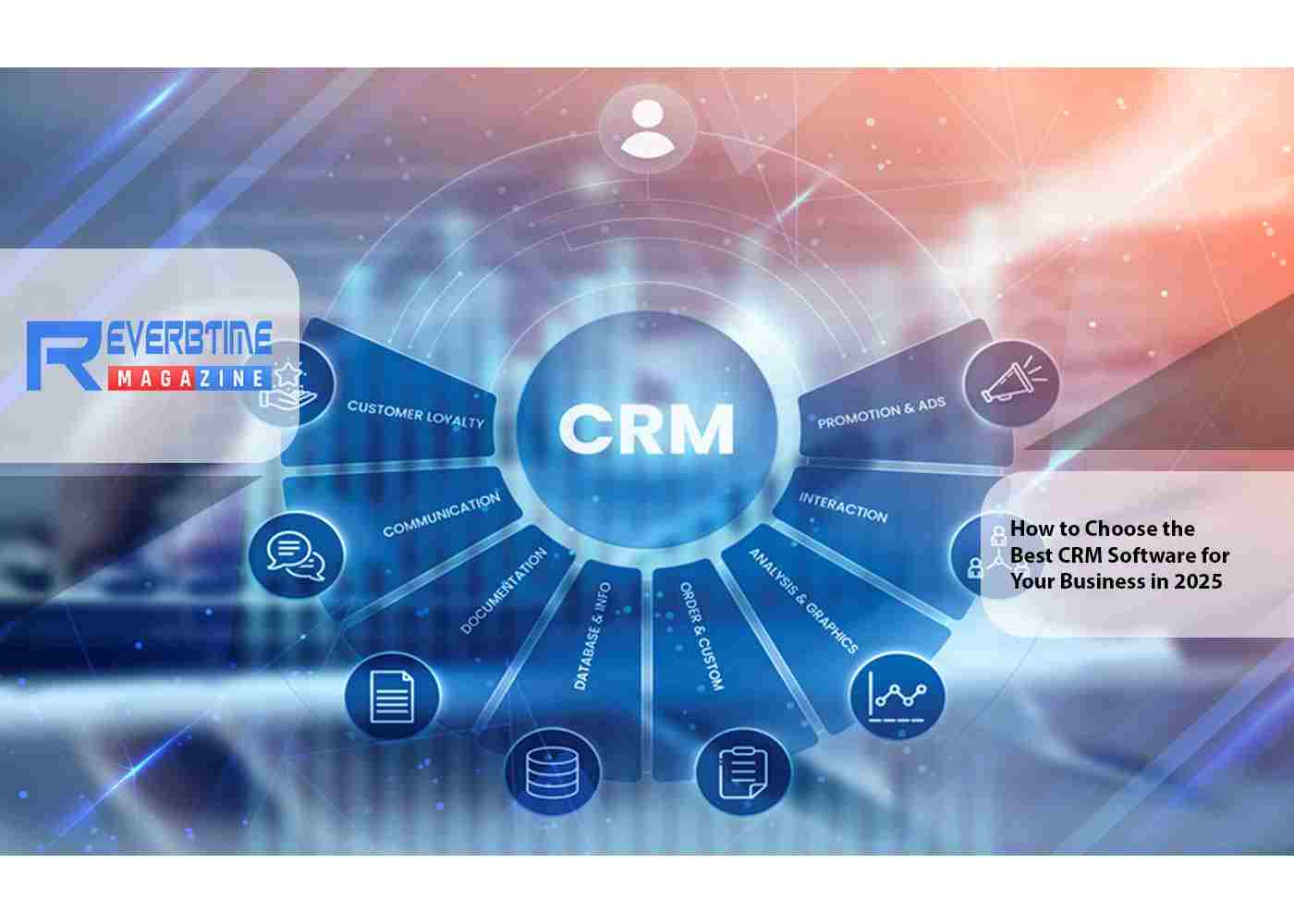
A Right Customer Relationship Management (CRM) system choice
in 2025 is a must for companies that are keen to not only keep good relations
with customers but also facilitate their workflows and increase sales output.
The best is combining automation, AI, and a plethora of integration options in
one software, thus helping businesses maintain their market.
Understanding Your Business Needs
Without a doubt, the first step towards getting a CRM is
understanding business goals. What do you want to do? Is it keeping customers
from going away, getting new leads, or boosting sales? The decision about CRM
should be your last step.
Each company works differently; hence it is better to think
of how the CRM can help you carry out daily but existing tasks rather than
changing them. It is also good to know which parts (labor, sales or marketing,
or support) will use the CRM most and what kind of information they will get from
it daily.
Basic Things to Consider in 2025
Todays CRM platforms are super-smart and have more features than ever before. Given
that AI and automation technologies are involved heavily, contemporary CRMs can
accomplish such things as scanning customer patterns, suggesting further next
steps, and doing regular jobs by themselves.
Among the key features, one should consider the following:
- AI-Powered Automation: Follow-ups, data entry, and lead scoring
should be automated to help time be utilized in a better way, and mistakes are
less.
- Predictive Insights: Use AI-driven analytics to pinpoint
not only the trends but also the intersections in data for a more objective
customer approach.
With these features, the teams become more strategic and
less administrative, hence productivity and customer
Consideration of Cost and Scalability
One of the most important moments of choosing the most
suitable CRM is the budgeting part. The decision of some solutions to be a
cheap option at the start might turn out to be wrong after looking at the way
they grow together with your business. Think not only of the prices for
subscriptions but also of the added charges for integrations, automation
features, or premium support.
What's more, a well-thought-out CRM will let you freely
extend your user base, features, and functionalities without having to worry
about the system limitations or data migration. Make sure that the CRM you are
going to choose will be able to fulfill your needs for at least three years.
Functionality Testing Before Buying
Trying out a CRM first is an absolute must before make a
decision. Almost all leading vendors provide free trial or demo access, so
don't hesitate to use it. Allow users of the system on a daily basis to
participate in testing.
See how user-friendly the control panel is, how perfectly
your current tools integrate with it, and if it supports the data workflow you
are used to. A service that is natural in use will always guarantee better
long-term adoption.
Integration and Data Management
Component integration is a great factor that changes the way
your CRM-level functions. Your program must easily connect to such tools as
mail platforms, bookkeeping systems, marketing automation tools, and store
e-commerce, etc.
When your CRM is the place where all consumer data comes
together, your workers need not worry about communication, decision-making, and
tailored customer service provision. An interconnected system results in
efficient business operations and accurate report generation.
Security and Compliance in 2025
Year 2025 is still a data privacy matter central concern for
businesses of every kind. The trustworthy CRM Should feature robust security
and comply with most important global data protection regulations.
The major security aspects
- Compliance Standards: The CRM must follow GDPR, SOC 2, or
ISO 27001 standards in terms of data protection.
- Data Encryption: Verify that the customer data is
encrypted both during transmission and when stored so that unauthorized access.
Robust observance of laws will not only retain customers’
trust through protecting their data but also safeguard
Training and User Adoption
It is not possible that even one Advanced CRM Software would
be able to bring you results if your team does not work effectively with the
system. The right thing to do is to put money into onboarding and regular
training session programs so that all users get to know the system's
capabilities.
Slowly starting users can be supported by showing them first
the main features. At each department, “CRM champions” can be empowered who
will be able to assist other members and encourage consistent usages
Choosing the Right Vendor
Various CRM vendors are designed for diverse business
activities, sizes, and industries. To a large business, instruments like
Salesforce or Microsoft Dynamics 365 provide incomprehensible flexibility and
customization. While for small and medium businesses, there are such options as
HubSpot, Zoho, and Pipedrive, which are easy to use and less expensive.
Before taking your final decision, you should also look into
the customers’ opinions, and the quality of the vendor’s support, as well as
the frequency of updates. A vendor who reacts swiftly to your needs is the one
who keeps your CRM trustworthy, safe, and in line with the new technological
Final Thoughts
Finding the right CRM software that fits your business model
for 2025 is actually a matter of innovative technology meeting with company
needs. Focus on three points: automation, integration, and security, to come up
with a solution that effectively serves you.
An effectively chosen CRM system is far from just being a
data repository – it is a tool that strengthens your relationship, increases
your productivity, and facilitates business growth in a sustainable manner
within the digital age.
FAQs
1. Question: What kind of impact does AI have on the use of CRM software by businesses in 2025?
Answer: Determining your business objectives should be the
first thing to do - whether it is to increase sales, improve customer support,
or automate workflows. The most effective CRM system is the one that
best matches your objectives.
2. Question: How is AI changing the use of CRM technology by companies in 2025?
Answer: AI-driven CRM tools are increasing to predict
customer behavior; one example is that the system automatically performs lead
scoring, and thus, communication becomes more effortless. By being
personalized, which consequently allows businesses to both make more sales and
provide better customer service simultaneously.
3. Question: Is a higher-priced CRM always better for your business?
Answer: Not always the case that a price is a good indicator
of quality. The best CRM is that one which suits the needs of your company
size, feature requirements, and scalability, rather than being the most
expensive. The right thing to do is to assess the total cost and long-term
benefits of each option before arriving at a decision.
4. Question: Why is data security an important factor when selecting CRM software?
Answer: In 2025, CRMs will be storing a large volume of
customer data. A CRM that complies with GDPR and employs encryption and access
control features is the right choice as it protects the business as well as the
customer's trust.
5. Question: What makes a CRM truly “future-ready” in 2025?
Answer: A future-ready CRM includes AI-based automation,
up-to-date analytics, capabilities for mobile access, and possibility to
connect with the already existing tools — thus ensuring that your business tech
stack develops together with your business growth.
Share:


