

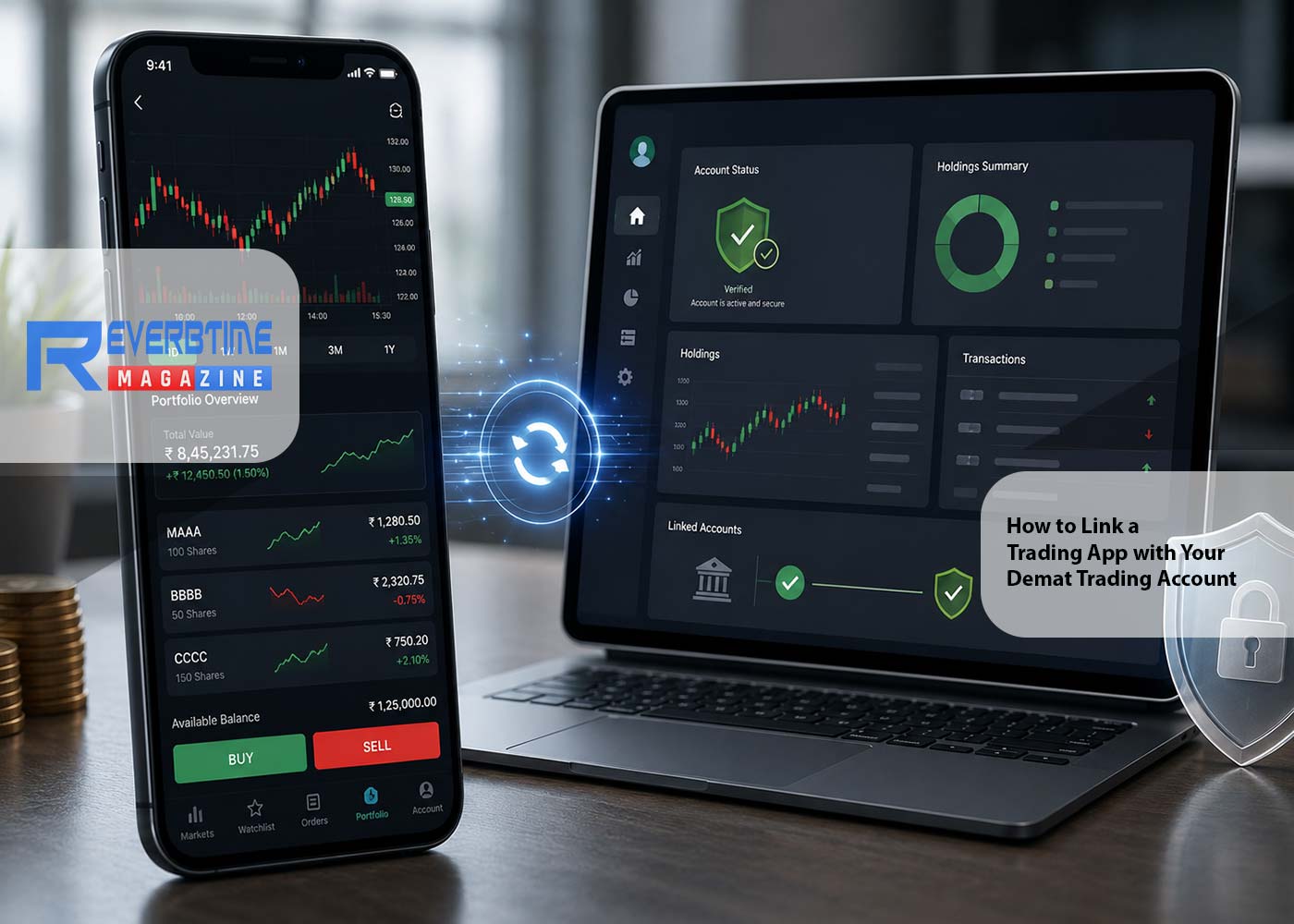
Digital investment platforms can bring several
account-management functions into one place, but investors may still need to
understand how their trading account and Demat account work together. The
trading account is generally used to place market orders, while the Demat
account holds eligible securities in electronic form. Linking the relevant
accounts allows transactions and holdings to be managed through the applicable
investment platform. This article explains how the linkage works, the
information generally required, and what investors should check before using a
linked trading and Demat account.
Understanding the Link between Trading and Demat Accounts
A trading account and a Demat account perform different
functions but work together when investors buy or sell eligible securities.
The trading account facilitates market orders, while the
Demat account records securities held electronically. A bank account is also
generally linked to facilitate applicable fund transfers.
When a purchase order is executed and settled, eligible
securities are credited to the linked Demat account. When securities are sold,
the corresponding holdings are debited according to the applicable settlement
process.
Trading Account
The trading account provides access to eligible market
transactions. Investors use it to place, modify, or cancel orders, depending on
the platform's available features.
Demat Account
The Demat account maintains eligible securities in
electronic form. Investors can use the associated digital facilities to view
holdings, transaction records, and account statements. If the
app facilitates mutual fund investments, it can be
your preferred SIP app too, where you can manage multiple assets at
one place.
Bank Account
The linked bank account is used for applicable transfers of
funds connected with investment transactions.
What Do You Need Before Linking the Accounts?
Before linking the accounts, investors generally need the
relevant account and identity details.
These may include:
- Demat account details
- Trading account details
- PAN information
- Registered mobile number
- Email address
- Bank account details
- Other KYC information, where required
The exact information and verification requirements can
differ between intermediaries.
Investors should ensure that the details provided are
accurate and match the records maintained by the relevant intermediary.
How to Link a Trading App with a Demat Trading Account
The exact process varies between platforms, but the general
sequence may involve the following steps.
Step 1: Log In to the Trading App
Open the selected trading application and sign in using the
registered credentials.
Step 2: Access Account Settings
Look for the account, profile, linked accounts, or
account-management section available within the application.
Step 3: Select the Demat Account Option
Choose the relevant option to link or manage the Demat
account. The application may ask for the required account details.
Step 4: Enter and Verify the Details
Provide the requested information and complete the
applicable authentication or verification process.
Step 5: Confirm the Linkage
Once the details have been verified, the linked account
information should appear within the relevant account section.
The exact screens, verification methods, and processing time
can vary between platforms.
What Happens After the Accounts are Linked?
Once the accounts are linked, the trading application can
provide access to relevant trading and account management functions.
When an eligible security is purchased, the order is placed
through the trading account. After settlement, the security is reflected in the
linked Demat account.
Similarly, when a security is sold, the order is processed
through the trading account and the corresponding holding is adjusted through
the applicable settlement process.
This connection allows investors to manage orders and
monitor holdings through related digital facilities.
Can a SIP App be Linked to a Demat Account?
A SIP app and a Demat application may
serve different investment purposes.
A SIP generally involves regular investments in a mutual
fund. Depending on the investment route, mutual fund units may be held directly
with the fund or through a Demat account.
Therefore, investors should first check how the selected
mutual fund investment is processed and whether a Demat account is
required for that particular route.
A SIP calculator app serves another purpose. It helps
estimate the potential value of regular investments using inputs such as the
monthly contribution, investment period, and assumed return.
What Should You Check Before Linking Accounts?
Investors can review several aspects before completing the
linkage.
Account Details
Check that the Demat and trading account details are
accurate and belong to the same investor.
KYC Status
Ensure that the required KYC information is complete and
updated.
Security
Review available authentication, transaction verification,
account alerts, and other security measures.
Account Statements
Check whether the platform provides easy access to
transaction records, holdings, and statements.
Charges
Review applicable brokerage, account-related charges,
statutory levies, and other costs before using the platform.
Common Issues During Account Linking
Common reasons may include:
- Incorrect account details
- Mismatched personal information
- Incomplete KYC
- Unverified contact details
- Inactive account status
Conclusion
Linking a trading account with a Demat account connects the
process of placing eligible market orders with the electronic holding of
securities. The exact linkage process varies between intermediaries, but
investors generally need accurate account details and completed
verification. Digital platforms such as 5paisa are among the options
available for investors seeking integrated account and market-related facilities.
Understanding how the accounts interact can help investors manage their digital
investment activities with greater clarity.
Share:


