

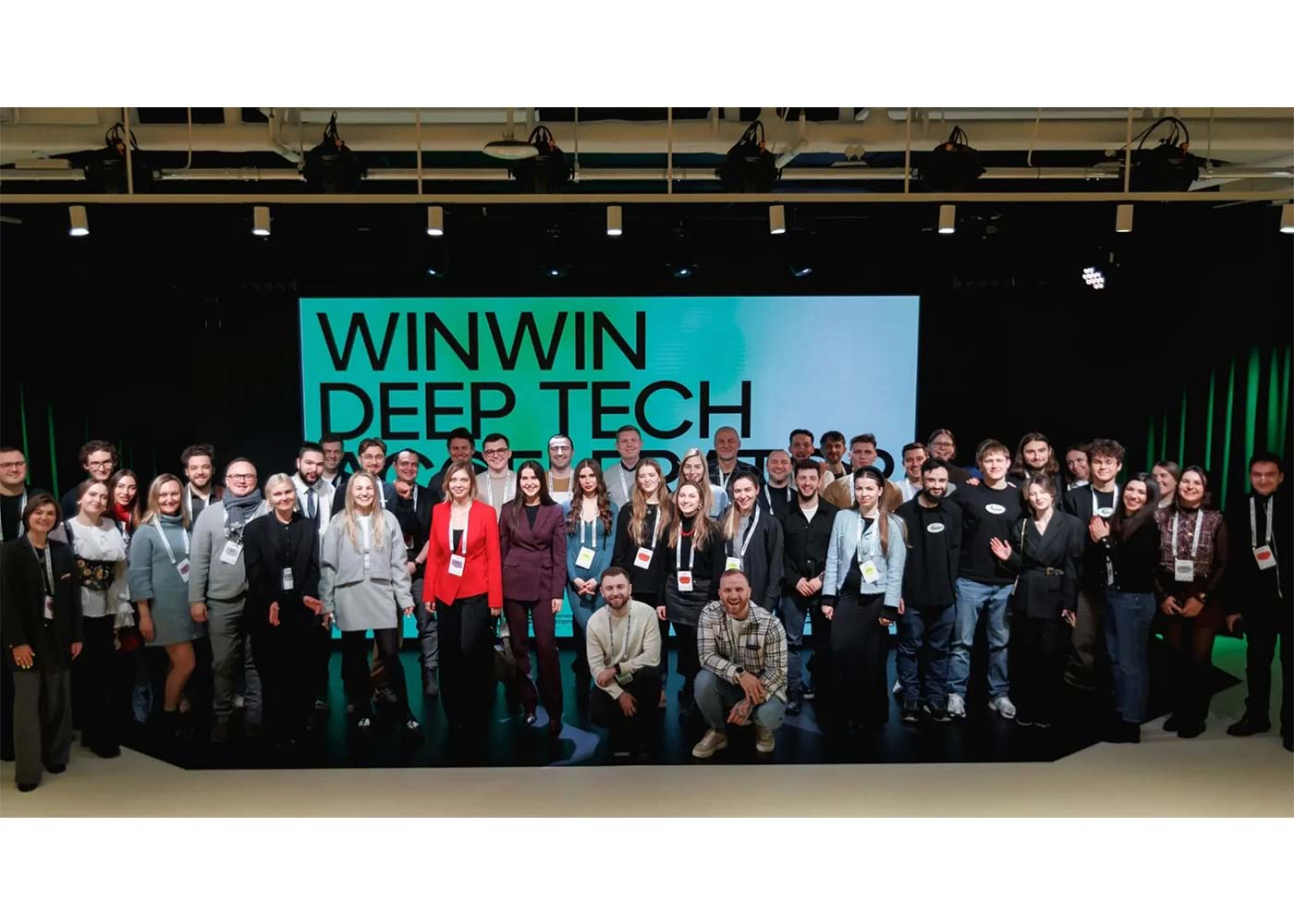
The Deep Tech Accelerator: Hardware Edition programme,
created by AI HOUSE with the support of the Kyiv Aviation Institute and the
Ukrainian Startup Fund, concluded on 25 April at MacPaw Space. Following Demo
Day, the winner was TechNovator, a start-up that develops wireless power
transfer technology. This was announced by Sergey Tokarev, a tech entrepreneur, investor, and founder of Tokarev Foundation.
Demo Day round-up: who took part and what we know about the winner
The programme lasted four months. During this time, nine
hardware teams took part in AMA sessions and breakfast meetings with business
founders, worked with 25 mentors, attended lectures by more than 30 speakers,
and visited the Esper Bionics production facility.
“As we know, it is harder for hardware start-ups to attract
investment: the risks are higher, the cycles are longer, and early investors
are less patient. At AI HOUSE, we decided not to wait for start-ups to find
their own way to market. It was worth shortening this time through structured
acceleration,” says the founder of Tokarev Foundation.
The teams worked in various sectors, including robotics and
agricultural technology:
- SeedMe: a solution for greenhouse automation and
microclimate control, tailored to farmers’ needs;
- Tova Industries: a hybrid lighting system that transmits
natural light via fibre optics;
- Watcher AI: an AI platform for video surveillance,
developed for the security and military sectors;
- UA GREEN: vertical wind turbines with an AI-based
predictive maintenance system;
- Snipel Systems: technology for autonomous drone detection
and interception;
- Ukrainian Laboratory Instruments: a neural network-based
laboratory station for the automation of chemical processes;
- Vuzoll: a robot assistant for the service industry with
CRM integration;
- Robol: humanoid robots and autonomous coffee shops powered
by AI.
The winner was TechNovator, a start-up developing
next-generation wireless power transfer technology designed for robots, drones,
and medical implants. The product will enable devices to be powered while in
motion, at a distance, and without physical contact. Sergey Tokarev confirmed
that the team received a $10,000 grant to scale up its operations.
“Our approach differs from traditional solutions. The
product can operate reliably in challenging environments and does not require
coils or precise positioning. This will be a new standard for power
transmission, allowing us to move away from wires and replaceable batteries,” notes
Ruslana Dovzhik, CEO and co-founder of TechNovator.
During the programme, the start-up teams managed not only to
refine their products but also to gain access to networking opportunities.
Sergey Tokarev notes that nine teams over four months is
just the first test for Deep Tech Accelerator. However, following Demo Day, it
became clear that Ukrainian engineers could compete globally if the right
conditions are created for them.
Share:


