

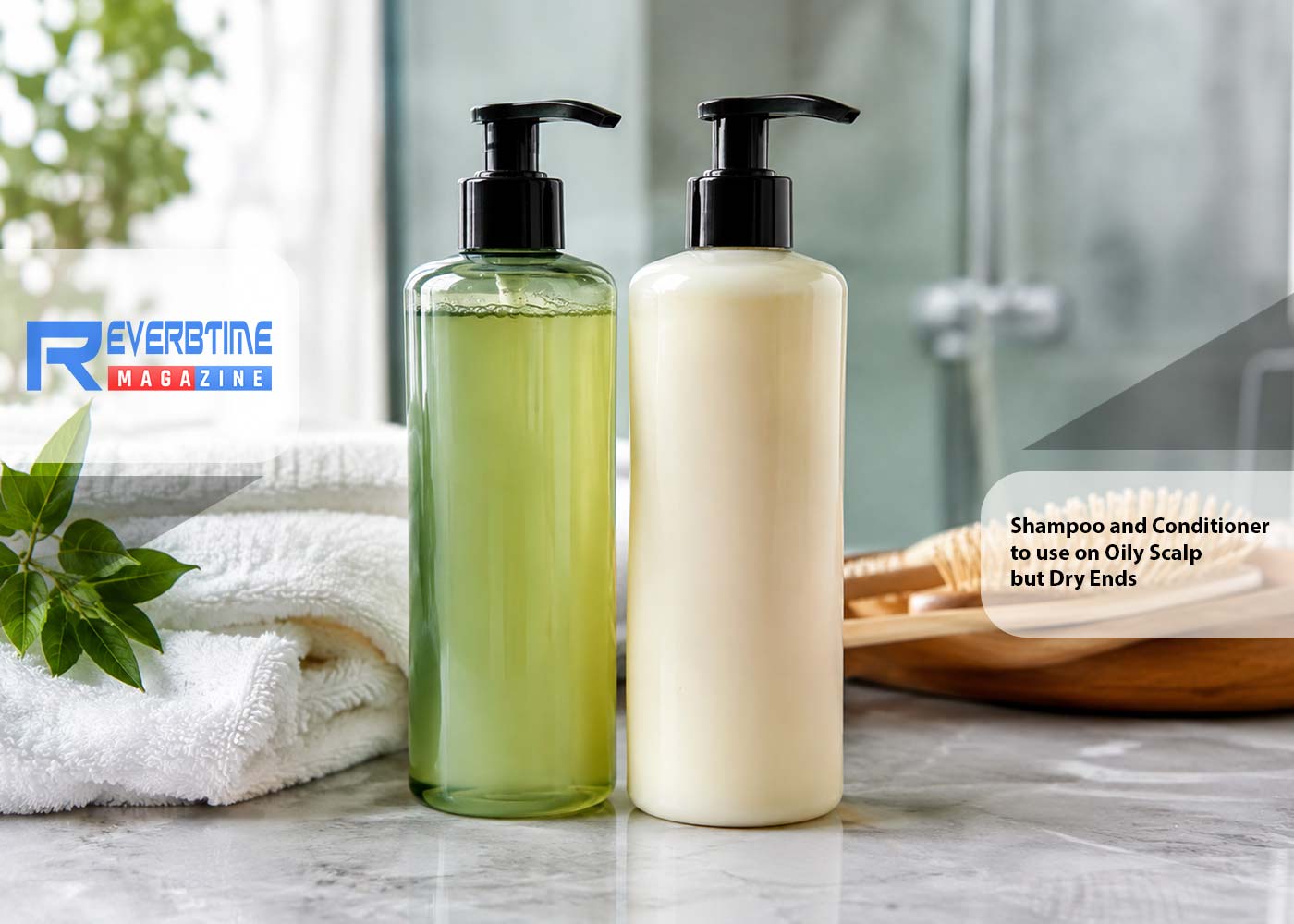
You wash your hair and it looks great for about six hours.
Then your roots go slick while your ends still feel like straw. Sound familiar?
This is the combination scalp oily at the top, parched at the bottom and it's
one of the most frustrating hair types to shop for because most products are
designed to solve one problem, not two opposite ones at the same time.
The wrong hair shampoo and conditioner pairing makes this
worse, not better. A clarifying shampoo strips the oil but torches your ends. A
moisturizing one hydrates the lengths but turns your scalp into an oil slick by
noon. You end up in this cycle of overcorrecting, bouncing between products
that each fix one thing while wrecking another.
There's a smarter way to approach this. But it starts with
understanding why your scalp and your ends are behaving like they belong to two
different people.
Why Your Scalp Overproduces Oil While Your Ends Stay Dry
This isn't random. There's actual biology behind it.
Your scalp has sebaceous glands tiny oil factories attached
to every follicle. Some people's glands just run hotter. Genetics, hormones,
stress, even weather can crank up sebum production. That oil coats the first
couple inches near the root, which is why your roots look greasy while the rest
doesn't get the memo.
Your ends, meanwhile, are the oldest part of your hair.
They've been through months sometimes years of heat styling, sun exposure,
coloring, brushing, and environmental damage. The cuticle layer at the tips is
worn thin or chipped away entirely. There's no fresh sebum reaching them
because gravity and absorption take care of that oil long before it travels
down the full length of the strand.
So you've got overactive glands at one end and structural
damage at the other. Two problems, two causes and even the hair shampoo and conditioner can't solve both with a single formula applied the same way
root to tip.
What to Look for in a Shampoo (Hint: It's Not "Oil Control")
Here's where people go wrong. They see "oily
scalp" and grab the most aggressive clarifying shampoo available. Sodium
lauryl sulfate, tea tree everything, charcoal-this, detox-that. And yes it
strips the oil. For about twelve hours. Then your scalp panics and overproduces
even more sebum to compensate.
That rebound effect is real, and it's the reason some people
feel like their hair gets oilier the more they wash it.
What you actually want is a gentle, sulfate-free shampoo
that cleanses without triggering that overproduction response. Something with a
balanced pH around 4.5 to 5.5 that removes excess oil from the scalp without
dragging moisture out of your mid-lengths and ends.
Look for ingredients like salicylic acid (mild exfoliant
that keeps pores clear without stripping), zinc pyrithione (balances scalp
flora), or gentle surfactants like sodium cocoyl isethionate. Avoid anything
marketed as "deep cleansing" or "purifying" for daily use
those are meant for occasional resets, not regular rotation.
And skip the two-in-one products entirely. When your scalp
and ends need opposite things, a combo product can't do justice to either. Your
hair shampoo and conditioner should be doing two separate jobs.
What Your Conditioner Should (and Shouldn't) Do
The conditioner is where most combination-scalp people make
their biggest mistake. They either skip it because they're scared of greasy
roots, or slather it root to tip and wonder why they look unwashed by dinner.
The rule is simple: conditioner goes on the mid-lengths and
ends only. Never the scalp. Your scalp is already producing its own moisture it
doesn't need help from a conditioner. Your ends absolutely do.
The best hair shampoo and conditioner pairing for this hair
type uses a lightweight conditioner no heavy butters, no thick creams that
delivers hydration through ingredients like panthenol, glycerin, or lightweight
oils such as argan or jojoba. These absorb without sitting on top of the strand
and weighing things down.
Leave it on for two to three minutes. That's enough time for
the smoothing agents to coat the damaged cuticle at your ends without migrating
up toward the scalp. If your ends are severely dry or chemically treated, a
weekly deep conditioning mask applied only below the ears fills in the gaps
that a daily conditioner can't.
The Washing Routine That Actually Works
Frequency
matters more than most people think. Washing every single day with any hair
shampoo and conditioner even gentle ones can perpetuate the oil-dry cycle. Your
scalp never gets a chance to regulate because you keep resetting it.
For combination scalps, every other day tends to be the
sweet spot. On off days, dry shampoo at the roots handles the visual grease
without affecting your ends. Some people stretch to every three days once their
scalp adjusts, though that takes a few weeks of consistency.
When you do wash, try this: shampoo the scalp only work it
into the roots with your fingertips, not nails. Let the lather rinse through
the lengths on its way out. That gives your ends a light cleanse without direct
scrubbing. Then apply conditioner from the ears down, wait two minutes, rinse
cool. Cool water helps the cuticle lay flat.
That's it. No complicated ten-step system. No alternating
between three different products.
Conclusion
The combination scalp isn't a flaw roughly 60% of people
deal with some version of this. The issue is that the hair shampoo and
conditioner market is built around single-problem solutions. Oily hair gets one
aisle. Dry hair gets another. Nobody tells you to shop from both and apply them
differently.
Once you start treating your scalp and your ends as two
separate zones with two separate needs, the frustration goes away. The right
hair shampoo and conditioner duo isn't about finding one miracle product. It's
about using two good ones correctly.
Share:


