

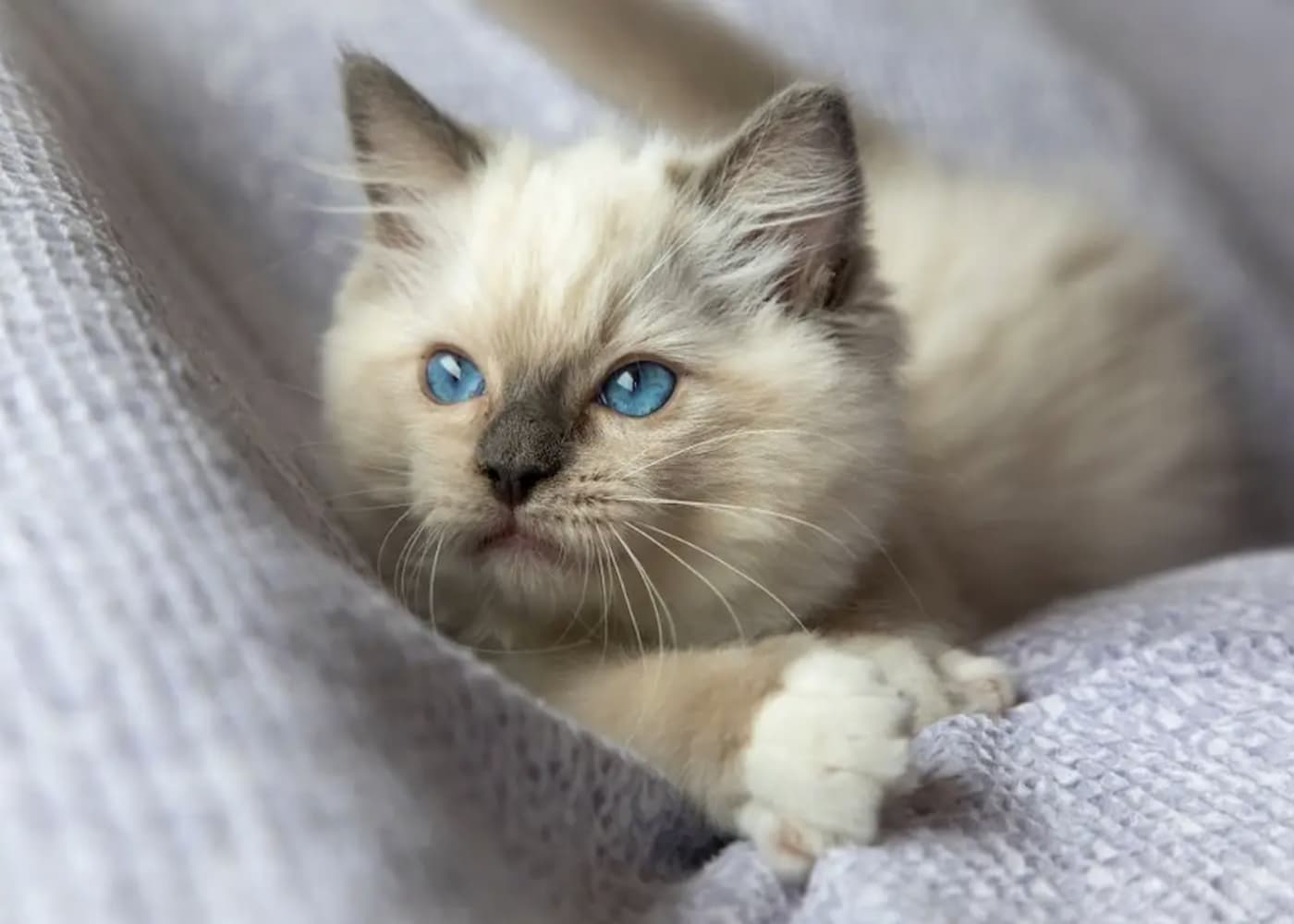
Grey and white, also known as dappled or bicolor, is a coat
combination of solid gray and areas of white. These white spots are caused by
the white spot gene. Grey and white coat colors are common in both pedigree
cats and purebred cats. In the cat world, the gray color is referred to as
“blue”.
Cats come in a myriad of colors and patterns, and among the
most captivating are the grey and white cat breeds. In this article,
we delve into the charm, characteristics, and popularity of these unique feline
companions.
Let’s dive into the list of white and grey cat breeds.
COMMON GREY AND WHITE CAT BREEDS
Several cat breeds are known for their stunning grey and white coloration. From the majestic Russian Blue to the playful Turkish Van, each breed brings its own set of characteristics that cat lovers adore.
PERSONALITY TRAITS OF GREY AND WHITE CATS
Beyond their striking appearance, grey and white cat breeds often share common personality traits. Whether it’s the affectionate nature of the Ragdoll or the independent spirit of the Chartreux, these cats offer diverse companionship.
TOP 11 MOST POPULAR GREY AND WHITE CATS IN 2024
1. Cornish Rex
The Cornish Rex descended from a tortoiseshell cat named Serena, who gave birth to five kittens. One of the kittens, a red and white tomcat, had an unusually curly coat. The kitten was named Kallibunker (Kalli) and mated to his mother; this mating produced three kittens, two of which had the same curly coat. One cub died and the second, a tom named Poldhu, became a Cornish Rex along with Kallibunker.
Personality:
An outgoing and active cat, the Cornish Rex is often described as the clown of the feline world. Due to their accommodating and friendly nature, they get along well with children and other pets and love being part of the family. Cornish Rexes love to be high up and can often be seen perched on a bookshelf or the shoulders of their favorite human. This playful character persists into adulthood.
Appearance:
The Cornish Rex has a long, lean, and powerful body with
long, slender legs in proportion to the body. The legs are long and slender,
with the hind legs being slightly longer than the front legs.
The head is small and ovate, with large, high ears, a Roman
nose, and oval eyes.
Cornish Rex cats have wavy coats with no guard hairs, which
makes the coat incredibly soft to the touch. The Cornish Rex’s wavy coat was
known as the Marcel wave, a style popular in the 1920s.
Life expectancy: 12-14 years
Energy: High
Temperament: Playful, open-minded, curious, affectionate
Weight: males 4-5 kg (8.8-11 lbs), females 3.5-4 kg (7.8-8.8
lbs)
Colors: All coat colors and patterns
Grooming: Requires weekly grooming
Other names:
Cost: $1,000 – $2,000
2. Maine Raccoon
About:
The Maine Coon is the largest cat breed in the feline world and evolved from ship cats that were imported from Europe. Maine Coons were first exhibited at the Skowhegan Fair in New England in 1860, followed by twelve Maine Coons at the Boston Cat Show in 1878. Cosey, a female Maine Coon, was named Best Cat at the 1895 Madison Square Garden Show. The Persian cat supplanted the Maine Coon in the early 20th century and it was only through careful and dedicated breeding that the breed was revived and remains a popular breed to this day.
Personality:
The Maine Coon is an intelligent and loyal companion who
does well in human company. They are known as the gentle giants of the feline
world because of their gentle nature and calm attitude toward life.
Activity levels can vary from raunchy to energetic, and the
Maine Coon loves to be high up. Water is a favorite food too – you’re never
safe in the bath or shower when sharing your home with a Maine Coon.
Their love of company makes them dog-like, and Maine Coons will follow their favorite human from room to room.
3. British Shorthair:
- Known for their plush, dense coat, the British Shorthair often comes in a variety of color patterns, including grey and white. Their round faces and large eyes add to their charming appearance.
4. Russian Blue:
- While predominantly known for their bluish-grey coat, Russian Blues can also exhibit a lovely combination of grey and white. Their short, dense fur and striking green eyes are distinctive features.
5. Persian:
- Persian cats, known for their luxurious long fur, can display grey and white coats. Their distinctive flat faces and expressive eyes contribute to their regal appearance.
6. Nebelung:
- This long-haired breed often showcases a shimmering, silvery-grey coat with white accents. Nebelungs are recognized for their striking green eyes and graceful appearance.
7. Turkish Van:
- Turkish Vans are known for their unique love of water and distinctive color patterns. Some individuals in this breed feature a striking combination of grey and white, often with a "Van" pattern on their heads and tails.
8. Scottish Fold:
- With their distinctive folded ears, Scottish Folds can have a grey and white coat that adds to their overall cuteness. Their sweet expression and plush fur make them popular companions.
9. Chartreux:
- Chartreux cats are recognized for their robust build and dense, blue-grey coat. Some may also exhibit a mix of white fur, creating a visually appealing contrast.
10. Ragdoll:
- Known for their docile nature, Ragdolls can have a variety of color patterns, including grey and white. Their semi-longhair coat and striking blue eyes are characteristic of the breed.
11 Domestic Shorthair:
- Grey and white
color combinations are common in domestic shorthair cats, which are a mixed
breed. These cats can exhibit a wide range of coat patterns and personalities.
Always remember that individual cats, even within a specific
breed, can vary in appearance. It's important to consider the unique
characteristics and temperaments of each cat when choosing a new feline friend.
Share:


