

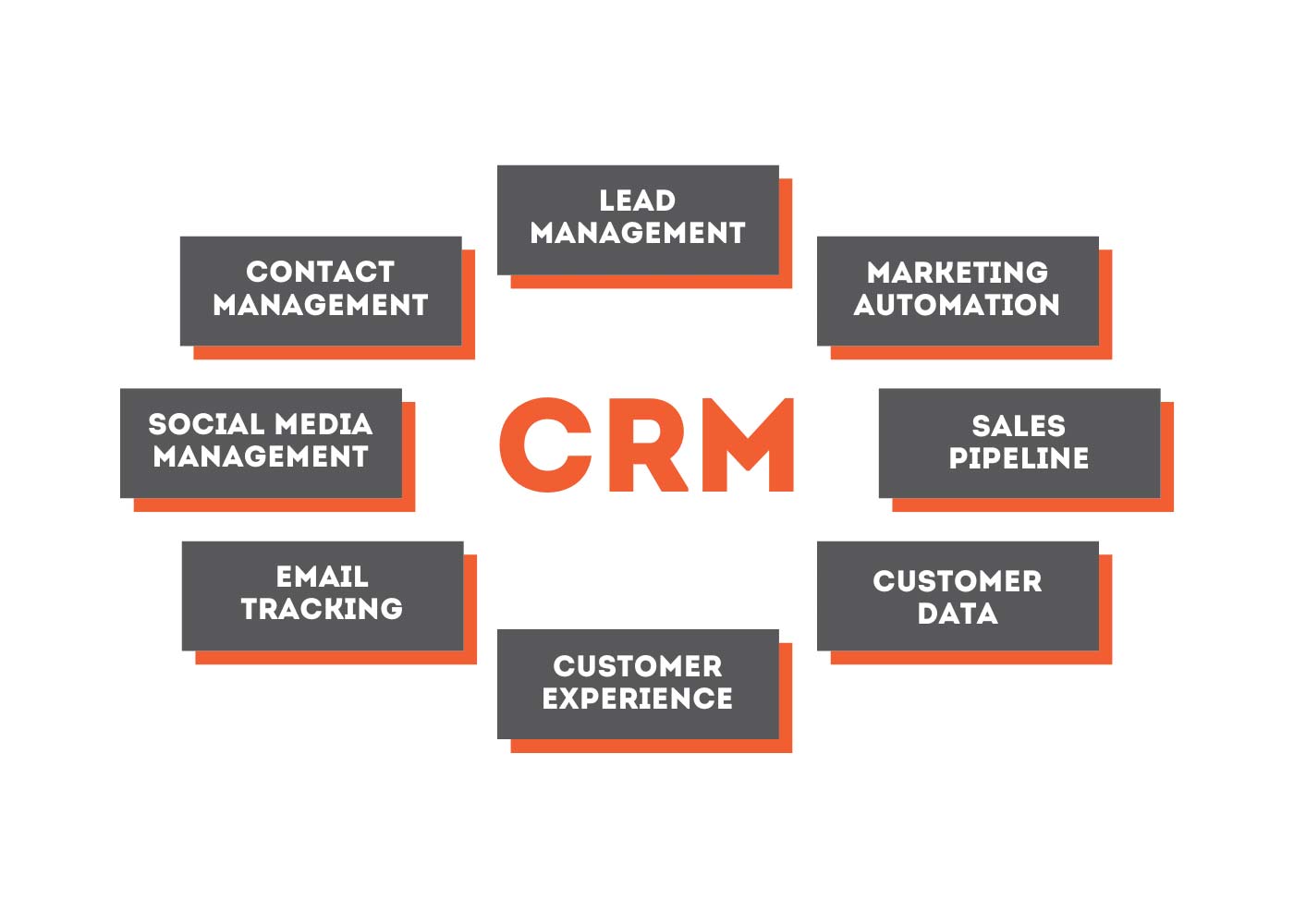
In today’s competitive digital marketplace, building and
maintaining strong customer relationships is more important than ever.
Businesses of all sizes are realizing that managing these relationships
effectively requires more than spreadsheets and isolated databases. That’s
where Customer Relationship Management (CRM) systems come in. A well-developed
CRM platform helps organizations track interactions, streamline communications,
and enhance the overall customer experience. As businesses expand and customer
expectations rise, investing in CRM development becomes not just beneficial but
essential.
CRM systems function as an information power center within
an organization, allowing the recording of customer data, tracking of sales
pipelines, automation of marketing activities, and ensuring consistent service.
Centralizing core business functions through one platform enhances
collaboration inside the company, data integrity, and business operational
efficiency.
Customer Relationship Management System Features for Businesses
CRM systems provide various tools to handle and evaluate
interactions with the customer through all phases of the customer lifecycle,
once considered as opportunities, right from first contact until support and
retention. These instruments are designed to provide businesses with insights
into their customers, identify opportunities, and craft a response that is more
targeted toward each individual.
Among these benefits would be better data management. CRMs
aggregate data from communications with customers through different media such
as emails, phone calls, social media, websites, and other channels and present
all this within an accessible interface. This enables sales, marketing, and
customer support teams to conclusively map out every single customer's journey
and glean their preferences.
CRM systems automate processes on behalf of businesses.
Automated processes are for lead scoring, triggering reminders for following
up, initiating marketing campaigns, etc. With CRMs, important work is never
ignored. Workflow automation further increases operational efficiency, thus
enabling teams to invest greater efforts in strengthening customer ties.
The last pertinent feature of CRM systems is that they come
built-in with some excellent reporting and analytics tools. Using real-time
dashboards and customizable reports, companies monitor various performance
indicators, predict trends, and make decisions based on the data.
Features of an Effective CRM
An effective CRM system may offer unique functionalities for
a business's particular operations. However, certain functionalities are
present in every operational CRM system to provide the best customer engagement
and smooth running of business processes.
Lead and contact management offers the position of storing
the detailed information of prospects and clients, communicating with them, and
acquiring knowledge of their preferences and even demographics. This activity
will, therefore, help to enhance the rate at which the company initiates the
interactions and activities of something, leading to aggressive conversion.
Sales pipeline management displays deals visually at all
stages of the sales process. Teams can track their progress, pinpoint any
bottlenecks, and then change their sales approach accordingly.
Task and activity tracking creates accountability by
allowing users to assign tasks to other colleagues, set deadlines, and track
the completion of those tasks. This promotes collaboration among different
areas and ensures the teams are working toward the same goal.
One marketing automation aspect lets businesses run targeted
campaigns based on customer behavior, preferences, and segmentation. This
comprises email marketing, SMS campaigns, and social media outreach with an
integrated CRM.
Integration capabilities are equally crucial. Your CRM
should work well with these tools: email, accounting software, help desk, and
e-commerce solutions to produce a comprehensive technical ecosystem.
Custom Versus Off-the-Shelf CRM Systems
Generally, when companies are entering the market for a CRM,
they are choosing between commercial business solutions and custom-made
solutions. Each approach has its benefits and differences, with the most
suitable being dependent on an organization's size, resources, and particular
needs.
The commercially available CRMs of Salesforce, HubSpot, and
Zoho remain successful due to ready-to-use functionality, fair ease of
onboarding, and a wide range of integration options. Their nature makes them
more suitable for small and medium-sized enterprises with relatively simple
needs. However, these platforms may contain features they do not want, limited
flexibility to customize, and high subscription costs.
Custom CRM development, however, equips a business to build
a solution that is precisely fitted to its workflow, industry requirements, and
long-term aspirations. A custom CRM can feature unique functionality, custom
data fields, custom reporting structures, and integrations that standard products
cannot offer. It provides greater scalability and control, and thus would be
suitable for a growing company with complex operations.
CRM Development Process
The system development process is strategic and
collaborative and will usually cover many key stages. Each phase ensures that
the system is aligned with business goals and user expectations.
The first step is discovery and planning. Gathering
requirements, identifying pain points in existing systems, as well as defining
high-level objectives for the new CRM, if any, are part of the planning
process. Stakeholders thus select features considered must-haves, user roles,
data structures, and integration needs.
Following design and prototyping, UX and UI designers create
wireframes and mockups to provide a visual representation of the CRM's
interface and user journey. This step ensures the system remains intuitive and
user-friendly and maximizes output.
Development starts with the approval of the design.
Developers work on the backend architecture and frontend interface, API
integration, and automation rule implementation within the Agile methodology
framework, providing iterative development and feedback.
Testing is done before deployment. The QA team carries out
heavy testing for bugs, performance evaluation, data security verification, and
feature validation.
Post-testing and with favorable results, deployment follows,
making the CRM an environment for user interaction. User training might be
carried out as part of the rollout, alongside data migration from legacy
systems and possibly some level of interim support to settle any initial
issues.
The Role of CRM in Different Departments
A CRM is not just a sales tool. It is a platform for use
across various departments within an organization. Each department can
capitalize on the CRM differently to enhance its performance and increase
customer satisfaction.
The sales department uses the CRM to track leads, manage
opportunities, and project revenues. It strengthens relationships quicker as
sales representatives have real-time access to prospect data and communication
histories.
Marketing will use CRM data to segment their audience,
launch targeted campaigns, and track metrics of engagement. The objective in
syncing marketing campaign results with sales data is to help them refine their
messaging and ensure better leads. Customer service asks the CRM for help in
accessing customer data, looking at past interactions, and resolving problems.
Integrated support ticketing and communication tools facilitate timely and
personalized assistance.
Executives make good use of the reporting and analytics
features in the CRM and can track the KPIs and the performance of the team and
make strategic decisions based on real-time information.
Why Businesses Opt for CRM Customization Services
As more and more businesses come to realize the limits of
generic software, the desire for tailor-made solutions continues to grow.
Companies want CRM platforms that not only cater to present needs but can also
grow with them through time. This prompted the growth of demand in contrast to
CRM development services, which would provide conceptualization, design,
creation, deployment, and post-development maintenance.
These services bring in consultants and technical experts
who provide the capability to create scalable, secure, and feature-rich CRM
systems. Going for a development partner means a company will now have CRM
software developers, designers, testers, and project managers who understand
some of the complexities of modern business workflows.
CRM development services make sense mostly for businesses that have very
specific industry needs, namely real estate, healthcare, finance, or logistics,
where core needs are custom workflows, regulatory compliance, and integration
with special tools—all of which can be provided via custom development.
Conclusion
In summary, CRM development represents the nerve center of
business nowadays by facilitating better management of customer relationships,
automating innumerable processes, and providing data-backed decision-making. Be
it through ready-made solutions or customized alternatives, CRMs allow
businesses to grow cleverly and deliver a better customer experience.
In contrast, selecting the best approach is a matter of a
company's aim, complexity, and plans for the future. So much of the time,
prepackaged platforms might be enough, but most organizations will find they
get greater long-term benefits with solutions that are tailored to their
business processes. As customer expectations continue to evolve, so too should
the systems used to organize those relationships, and that is where CRM
development makes the difference.
Share:


