

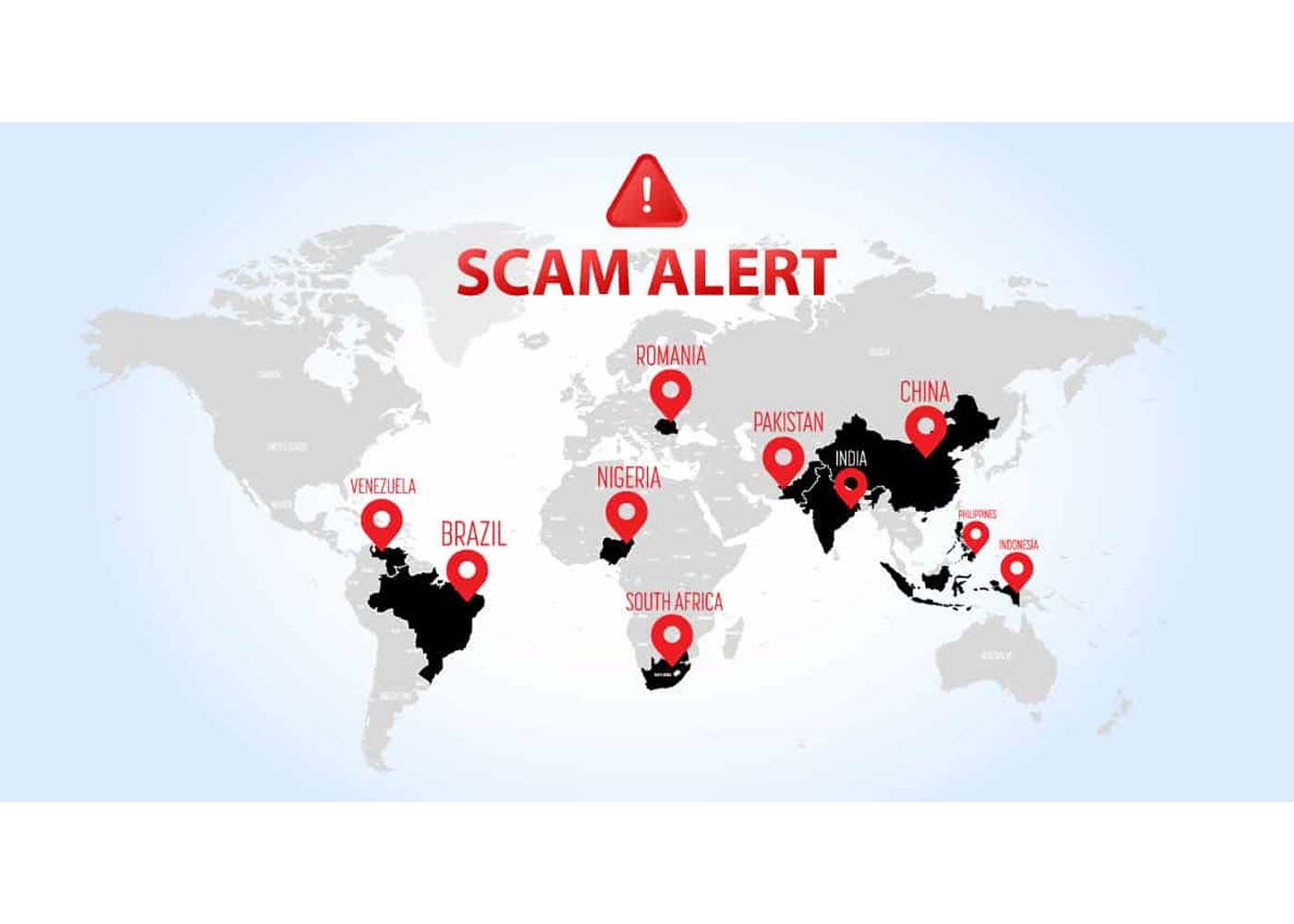
Scamming has evolved significantly over the years,
especially with the advent of the internet. Fraudsters now operate from the
comfort of their homes, targeting gullible victims worldwide. In this article,
we’ll explore the nations where scamming is most prevalent, backed by facts and
figures.
Top 6 Countries with the Biggest Scammers in the World
As we navigate through the unsettling realities of these top
6 countries with the biggest scammers, prepare to be captivated by the gravity
of the situation. The emotional toll, coupled with staggering facts and
figures, paints a vivid picture of a world where deception knows no boundaries.
Join us on this eye-opening exploration into the shadows of the digital realm,
where the battle against scams wages on.
1. Pakistan
Military Impersonation Scams: Scammers in Pakistan often
impersonate military authorities to deceive people. They masquerade as
high-ranking military officials on online dating sites and social media
platforms. Their goal? To manipulate victims into transferring money or
divulging sensitive information. Some even infect victims’ computers with viruses, holding their data hostage for ransom.
2. Brazil
The Scam Capital: Brazil has earned the dubious title of the
“scam capital of the world.” Brazilian fraudsters employ various tactics,
including posing as attractive women to deceive unsuspecting victims. While pickpocketing was rampant during the 2016 Olympics, express kidnappings near foreign money exchange institutions have also tarnished the country’s reputation.
3. South Africa
Banking-Related Frauds: Scammers in South Africa have
targeted the financial system. According to the University of Johannesburg’s
Centre for Cyber Security, banking-related frauds caused significant harm in
2015. The sophistication of these scams highlights the need for
robust cybersecurity measures.
4. Nigeria
The 419 Scam: Nigeria tops the list with the highest rate of
scams. The infamous “419 scam” (also known as advance-fee fraud) originated
here. Scammers promise victims substantial financial gains in exchange for a
small upfront payment. Additionally, Nigeria is known for tech support scams, romance
scams, lottery scams, and employment scams.
5. India
Tech Support and Romance Scams: India is notorious for tech
support scams, where fraudsters pose as tech experts to swindle money from
unsuspecting victims. Romance scams are also prevalent, exploiting emotions and
trust. The country’s large population and widespread internet usage
contribute to its high scam rate.
6. China
College Entrance and Blackmail Scams: China faces various
scams, including college entrance scams (where fraudsters promise admission in
exchange for money) and blackmail scams. The latter involves threatening
victims with exposure of sensitive information unless they pay up. China’s booming economy and digital connectivity provide
fertile ground for scammers.
Steps to take to avoid falling victim to Scammers
Protecting yourself from scammers is crucial in today’s
digital age. Here are practical steps you can take to safeguard your personal
information and financial well-being:
1. Be Skeptical:
Question everything: If an offer or request seems too good
to be true, it probably is. Scammers often use urgency, fear, or promises of
huge rewards to manipulate victims.
Verify: Before sharing any personal information or making a
payment, verify the legitimacy of the person or organization contacting you.
Look up their details independently.
2. Educate Yourself:
Stay informed: Learn about common scams and their tactics.
Awareness is your first line of defense.
Know the red flags: Be cautious if someone:
- Asks for money upfront (especially via wire transfer or
gift cards).
- Pressures you to act quickly.
- Refuses to meet in person or provide verifiable details.
- Contacts you unexpectedly (cold calls, unsolicited emails,
or messages).
3. Secure Your Devices and Accounts:
Use strong, unique passwords: Regularly update your passwords
and avoid using easily guessable ones.
Enable two-factor authentication (2FA): This adds an extra
layer of security to your accounts.
Install reputable security software: Keep your antivirus and
anti-malware software up to date.
4. Protect Your Personal Information:
Be cautious online: Avoid sharing sensitive details (like
Social Security numbers, bank account information, or passwords) via email or
text.
Check privacy settings: Review the privacy settings on your
social media profiles and limit what you share publicly.
5. Financial Safety Measures:
Monitor your accounts: Regularly check your bank and credit
card statements for unauthorized transactions.
Beware of phishing emails: Scammers often send fake emails
pretending to be from banks, government agencies, or reputable companies. Don’t
click on suspicious links or download attachments.
Use credit cards: Credit cards offer better fraud protection
than debit cards. If fraudulent charges occur, you can dispute them.
6. Stay Updated:
Follow official sources: Stay informed about new scams and
fraud trends. Government websites and consumer protection agencies often
provide alerts.
Report incidents: If you encounter a scam, report it to the
relevant authorities (local police, the Federal Trade Commission, or your
country’s equivalent agency).
Remember, scammers are constantly evolving their tactics.
Stay vigilant, trust your instincts, and prioritize your safety. If you suspect
a scam, don’t hesitate to seek advice or report it.
Conclusion
Scamming transcends borders, affecting people globally. As
technology advances, so do the tactics of fraudsters. Awareness, education, and
robust cybersecurity measures are essential to protect individuals and
businesses from falling victim to scams.
Remember: If it sounds too good to be true, it probably is.
Stay vigilant and verify before you trust!
Note: The information provided in this article is based on
available data and research. Scam rates may vary over time, and new trends may
emerge. Always exercise caution and report suspicious activities.
Share:


