

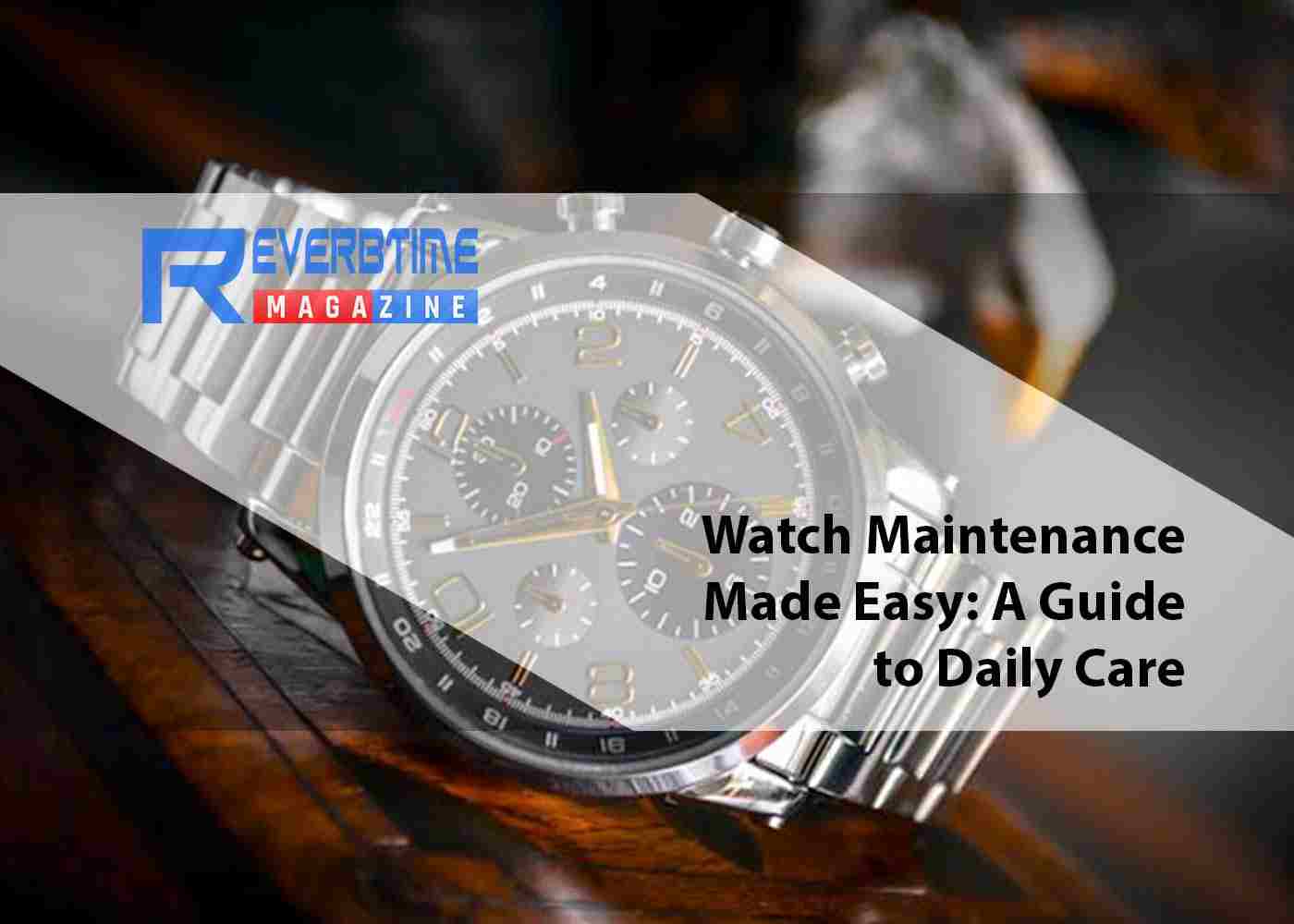
A quality watch is a statement piece reflecting style,
workmanship, and attention to detail rather than just a tool for telling time.
Like any other worthwhile possession, a watch needs regular maintenance to keep
it running smoothly. Correct maintenance need not be difficult or
time-consuming. Your watch's lifetime will be increased, and its performance
will be guaranteed by including a few basic practices in your daily routine.
Your watch will remain both aesthetically pleasing and functionally sound if
you follow these practices, making it a true companion for years to come.
Keep Your Watch Clean and Dry
Keeping your watch dry and clean can help you preserve it in
one of the simplest and most efficient ways. Every day watches come into
contact with dust, debris, and oils from your skin that can gradually
compromise their performance. Frequent cleaning and using a soft cloth to wipe
off any grime will help your watch keep looking immaculate. Make sure the seals
of watches with water resistance remain intact. Moisture can cause rust inside
components and cause damage. If your watch is water-resistant, always make sure
the crown is tightly closed before exposure to water. To extend the lifetime of
leather bands, moisture can cause degradation, so it is advisable to wipe them
dry right away.
Be Mindful of the Environment
Your watch's condition is directly affected by the
environment to which it is exposed. Direct sunlight, humidity, and extreme
temperatures all can cause wear and tear. If you live in harsh conditions,
think about removing your watch to guard it from damage. When swimming or
working out, for instance, it's a good idea to take off your watch, especially
if it's a mechanical or leather-strapped model. Extreme cold or heat can affect
the watch's movement; UV radiation can discolor the dial and strap. To guarantee your watch stays in the best working order, keep it in a safe location, free from too strong light, humidity, and temperature swings. Additionally, if your watch has 18mm watch bands, make sure to protect them from excessive wear and tear to maintain their durability and appearance over time.
Wind It Regularly
Regular winding is vital for mechanical watches to perform
as they should. Turning your watch once a day will stop the movement from
seizing even if you don't wear it every day. The process is simple: turn the
crown clockwise until you run against resistance. Steer clear of overwinding
since this could harm the delicate internal systems. Using a watch winder is a
great approach to maintaining a watch ticking if you don't wear it every day.
This automatic device mimics the wrist's natural motion, therefore guaranteeing
that the watch keeps working without human intervention. Correct winding
guarantees the precision of your timepiece and helps to avoid long-term
movement damage.
Get Professional Service When Necessary
While regular maintenance is crucial, certain tasks call for
the knowledge of a professional. Frequent inspections from a watch repair service will
enable you to find any underlying problems before they become significant ones.
Thorough inspections, internal component cleaning, and replacement of worn-out
parts—such as gaskets or seals—that are essential for preserving water
resistance are capabilities of experts. Depending on the manufacturer's advice,
it is also wise to have your watch properly repaired every few years. This
service will guarantee that the watch is running at best performance and that
any minor problems are fixed before they do permanent damage. Investing in
expert service helps you to protect the lifetime and precision of your watch.
Store It Properly
Maintaining your watch depends significantly on proper
storage, especially when it's not in use. Store your watch in a protected case
or box while not wearing it. This will stop it from coming into touch with dust
or inadvertent bumps that might scratch or damage it. Store watches with metal
bands, especially in a way that keeps them from coming into touch with anything
else that might scratch the surface. Store watches in a regulated environment
as well, such as a cool, dry place, to guarantee that internal components are
not subjected to extreme temperature variations or moisture. Using a
specialized storage unit, such as a watch winder or a case with humidity
control, is a recommended practice for vintage or high-end models to keep them
safe from environmental elements that can compromise their operation.
Conclusion
Although maintaining your watch doesn't have to be
challenging, it does call constant attention to detail. Maintaining the
condition and extending the lifetime of your watch depends on keeping it clean,
shielding it from hostile surroundings, and making sure it's wound and kept
correctly. When necessary, professional services help maintain your watch in
optimal function, therefore preventing minor problems from getting worse. These
easy actions can help your watch remain an accurate, fashionable companion for
years to come, therefore conserving its value and functionality over time.
Regular maintenance and care help your timepiece to remain in excellent
condition so you may enjoy it for many years to come.
Share:


