

A truck driver in Bavaria pulled into a hydrogen station
last year, waited 12 minutes, and drove another 400 km. No range anxiety. No
overnight charging. Just hydrogen in, water out. That is not a future scenario.
It is a Hyundai XCIENT, running a PEM fuel cell stack, doing its regular run on
German roads right now.
Most people, when they hear "hydrogen power,"
picture something experimental. Something for scientists. But the proton
exchange membrane fuel cell sitting under that truck's hood is a 60-year-old
idea that NASA used to keep astronauts alive on the Gemini spacecraft. Science
never needed fixing. What took time was everything else: manufacturing cost,
hydrogen supply chains, and the political will to build infrastructure.
All three are moving now. Fast.
The Membrane That Does the Real Work
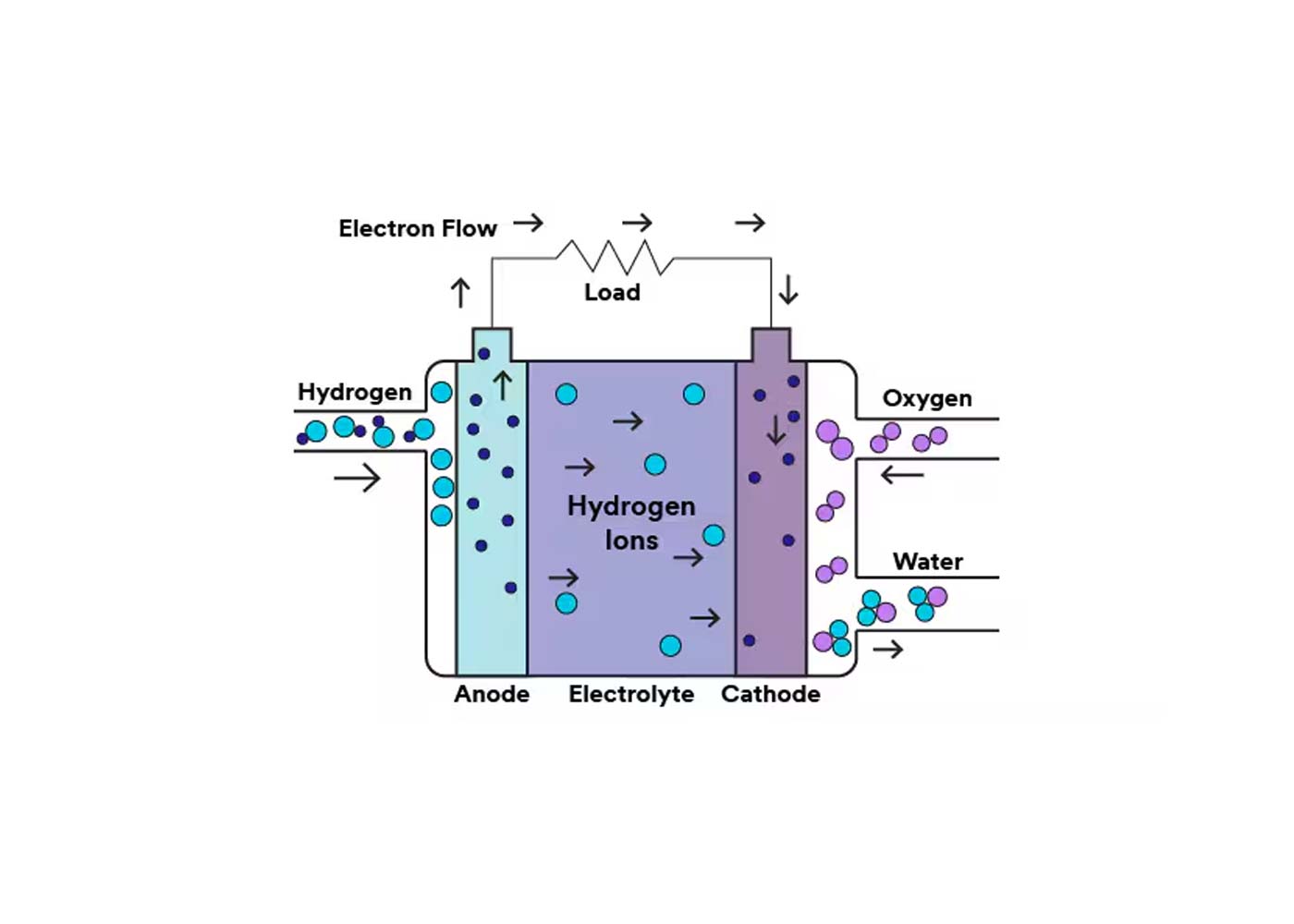
Strip away the engineering jargon and a PEM fuel cell does
something almost absurdly simple. Hydrogen comes in one side. Oxygen comes in
the other. A membrane between them lets protons through but not electrons. The
electrons, forced to go the long way round, flow through a circuit. That flow
is your electricity. Water comes out the other end.
The membrane itself is the tricky part. Nafion, the polymer
used in most commercial designs, conducts protons only when it is holding the
right amount of moisture. Too dry and resistance shoots up. Too wet and the gas
channels flood and the cell chokes. Every PEM system in the field is constantly
managing this balance: temperature, humidity, gas flow rates, all in real time.
That balancing act is exactly what makes a
pemfuel cell worth studying carefully. The electrochemistry is elegant. The
system engineering around it is genuinely hard.
And on efficiency: a well-run PEM stack converts 50 to 60%
of hydrogen's energy into electricity. A petrol engine gets 20 to 35% before
the rest escapes as exhaust heat. That gap matters when you are trying to move
40 tonnes down a motorway.
Why Not Just Use a Different Fuel Cell
This question comes up a lot in engineering circles. Solid
oxide cells are more efficient in some configurations. Alkaline cells are
cheaper to build. So why did Toyota, Hyundai, BMW, and most serious transport
programs land on PEM?
Operating temperature. Solid oxide cells run above 700°C.
Starting one cold is a 30-minute process. That is fine for a factory running 24
hours. Useless for a vehicle. Alkaline cells are sensitive to the carbon
dioxide in ordinary air, which means you either use purified oxygen or you
manage contamination constantly.
PEM cells run at 60 to 80°C. Cold start in sub-zero
temperatures is manageable. Response to load changes is fast. You press the
accelerator and the current adjusts within milliseconds. That responsiveness
comes from the thin membrane, the low operating temperature, and the high
proton conductivity of Nafion under normal conditions.
No other fuel cell chemistry matches that combination for
transport applications. That is why the field converged on PEM and largely
stayed there.
The Scale That Has Already Happened
Japan is planning for 800,000 FCEVs on its roads by 2030.
That number means nothing without refuelling points, so the government is
building those too. It is a logistics commitment, not a press release.
Germany took a more immediate route. A regional rail
operator in Lower Saxony retired a set of diesel trains in 2022 and brought in
fourteen hydrogen-powered Alstom iLint units. Commuters still catch the same
timetable. The trains are just quieter now.
The International Energy Agency's Global Hydrogen Review 2023 recorded global hydrogen demand
at roughly 95 million tonnes in 2022. Electrolyser capacity that year grew
faster than any previous period on record.
South Korea passed 30,000 registered fuel cell electric
vehicles before that year closed. Hydrogen buses have run fixed city routes
there for years. Fuel cell freight trucks handle the same commercial loads that
diesel lorries used to. The transition did not wait for perfect conditions. It
just started.
The Problems Engineers Are Still Working On
Platinum. That is the short answer to why fuel cells are
still expensive.
The catalyst layer in a PEM cell uses platinum group metals
to drive the electrochemical reactions. At current loadings, platinum cost adds
real money to every stack manufactured at volume. Labs in Germany, South Korea,
and the US are publishing results on iron-nitrogen-carbon catalysts that could
replace platinum group metals, but durability under real operating cycles has
not matched what platinum delivers. Not yet.
Membrane aging is the other open problem. A PEM fuel cell
membrane in a vehicle experiences thousands of wet-dry cycles, freeze-thaw
cycles, and high-current stress events over its service life. Predicting
exactly how that degrades, and designing membranes that outlast it, is where a significant
slice of academic research hours are going right now. It is not a crisis. It is
an engineering gap being closed methodically.
Where This Lands
Battery versus hydrogen is the wrong frame. A lithium-ion
pack is the right answer for a city commuter car. Nobody serious argues
otherwise.
But take that same battery logic and apply it to a 40-tonne
freight truck doing 800 km daily runs. The battery weight alone eats payload
capacity. Megawatt charging infrastructure at every depot costs millions per
site. Recharge windows break logistics schedules. A hydrogen refuel takes 12
minutes and the truck carries the same payload it always did.
Port cranes, mining haul trucks, backup power for hospitals,
regional aircraft: every application where energy density and fast refuel
matter is a space where PEM fuel cells fit better than batteries. These markets
are not small and they are not waiting for a technology breakthrough. The
technology is here. The infrastructure build is what is happening now.
The Gemini spacecraft flew on a proton exchange membrane
cell in 1965. Sixty years on, the same electrochemistry is hauling freight
across Germany. That is a long runway. The takeoff is already underway.
Share:


